
Last updated October 15, 2026
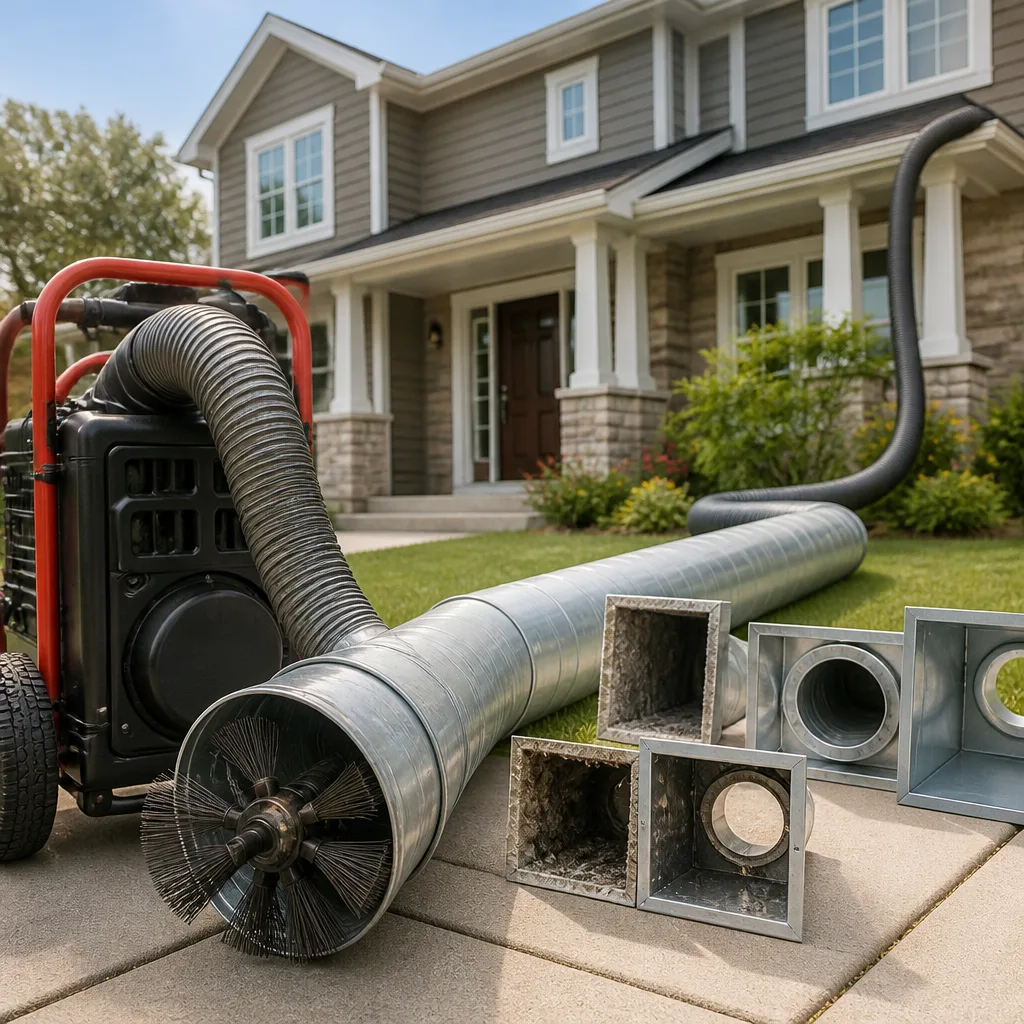 Whole-home duct cleaning
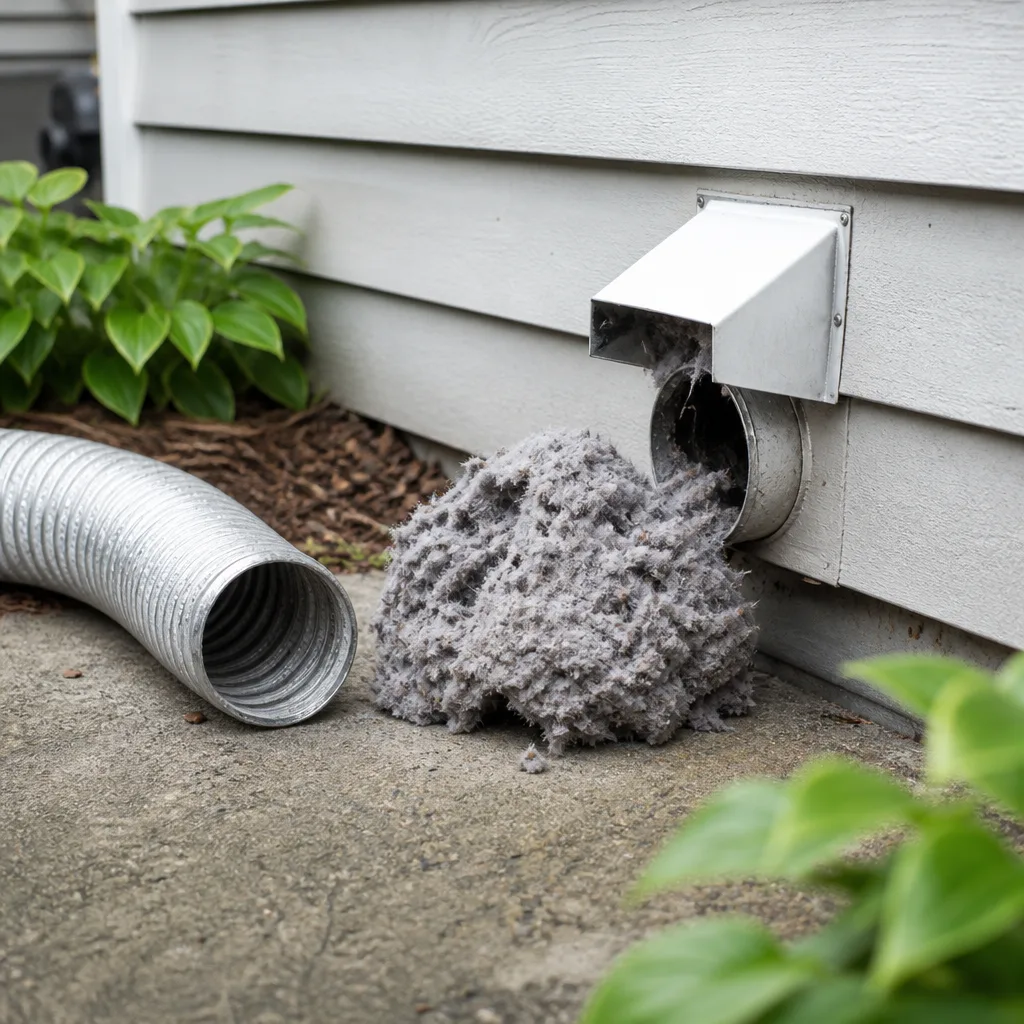 Dryer vent cleaning
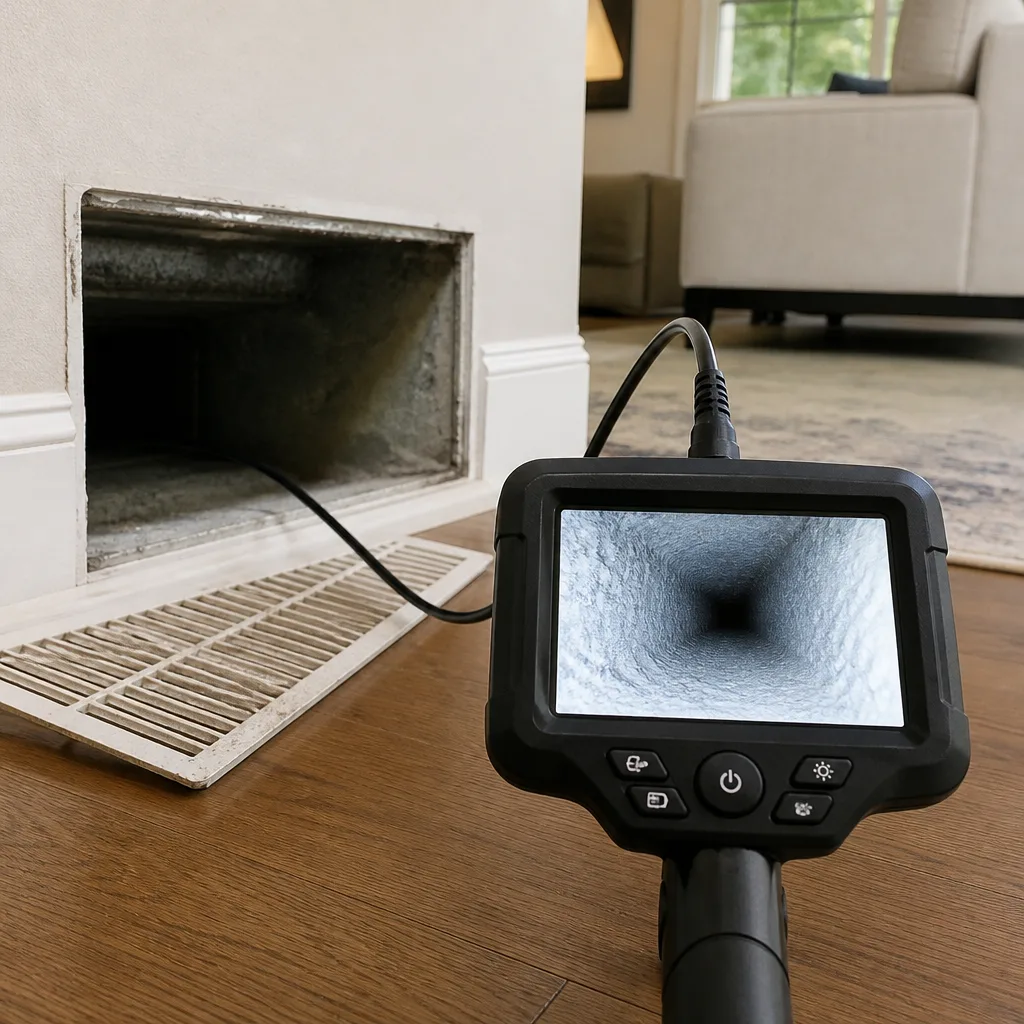 Camera inspection
 Sanitizing & deodorizing
Whole-system duct and dryer vent check with before-and-after photos - you see exactly what came out of your vents
That "$99 whole-house special" is a bait ad - the real number appears once they are in your hallway, or the "clean" is a shop-vac at the register. We photograph the inside of your ducts before and after instead.
Air Duct Cleaning Permits, Codes & Inspections in GA: What You Need to Know
Here’s a scenario we hear often in Marietta: a homeowner books a duct cleaning, the crew shows up, and halfway through the job the lead tech says, “You’ve got some disconnected ductwork in the crawlspace. We can fix that while we’re here, just sign this change order.” What that tech is really saying is that the job just crossed from maintenance into mechanical work, and in Georgia, those two categories live under very different rules. Most Atlanta-area homeowners never learn the line between them until a city inspector’s notice shows up or an insurance adjuster starts asking questions. This guide walks through exactly where that line sits under Georgia’s mechanical code, what requires a permit in Cobb County specifically, how to document permit-exempt work so you’re protected, and what happens when a routine Air Duct Cleaning uncovers a code violation that someone else left behind.
Quick Answer
The Complete Guide to Air Duct Cleaning in Marietta explains that the work itself does not require a permit anywhere in Georgia because it counts as maintenance, not construction. The moment a technician disconnects ductwork, replaces flex duct, adds duct board, or installs an in-duct device like a UV purifier, Georgia’s State Minimum Standard Mechanical Code treats that as mechanical work requiring a permit, inspection, and often a licensed contractor. In Marietta and unincorporated Cobb County, that means the local permit office gets involved, and unpermitted work can void your homeowner’s insurance coverage for any HVAC-related claim.
Styles & brands we work with
Table of Contents
- The Permit Line: Maintenance vs. Mechanical Work in Georgia
- The Exact Georgia Code Sections That Define Permit Work
- Cobb County & City of Marietta: Permit Offices, Timelines, and Fees
- How to Document That Your Duct Cleaning Was Permit-Exempt
- The Insurance Liability Chain: Unpermitted Work and Claim Denials
- When Duct Cleaning Reveals a Code Violation: Your Options in Marietta
- UV Purifiers and In-Duct Devices: The Permit Trap Most Homeowners Miss
- 10 Questions to Ask Any Duct Cleaning Contractor Before Work Starts
The Permit Line: Maintenance vs. Mechanical Work in Georgia
Georgia adopted the International Mechanical Code as the foundation for its State Minimum Standard Mechanical Code, and that code draws a bright line between two kinds of work on your HVAC system. Cleaning the inside of ductwork, coils, blower wheels, and dryer vents is maintenance. The code doesn’t care about it. No permit, no inspection, no contractor’s license required for the cleaning itself. The moment anyone disconnects a duct from a plenum, removes a section of duct, replaces flex duct, fabricates a new transition, adds a register, or installs any device inside the air stream, the code reclassifies that as mechanical installation and alteration work. That work requires a mechanical permit in Marietta City and unincorporated Cobb County, plus a licensed contractor of record.
Why does this distinction exist? Because cleaned ducts carry air. Altered ducts carry liability. A poorly reconnected duct can leak carbon monoxide if the gas furnace is nearby, can depressurize a crawlspace and pull radon or pesticide vapor into the living space, and can overload a blower motor that wasn’t sized for a longer, kinked flex run. The permit process forces someone qualified to look at the work before and after. It also creates a paper trail that matters enormously if you ever sell the house or file an insurance claim.
In our experience across Marietta neighborhoods like East Cobb, Whitlock Avenue, and the historic district near the Square, most permit-related problems don’t come from shady operators doing obvious demolition. They come from well-meaning techs who treat “reconnect that loose duct” as part of the cleaning package, not as mechanical work. The customer never knows the line, the tech never mentions it, and the problem stays invisible until it isn’t.
The Exact Georgia Code Sections That Define Permit Work
Here are the specific sections of the Georgia State Minimum Standard Mechanical Code that homeowners in Marietta should know about. We’re going to paraphrase each one in plain language, because the original text reads like a legal settlement.
- Section 106.1 (Permits Required): Any mechanical work involving the installation, extension, alteration, repair, or replacement of a mechanical system requires a permit. The key word is “alteration.” Reconnecting a duct that was already disconnected is an alteration, even if no new material is added. Cleaning the interior of a duct that stays in place is not.
- Section 106.2 (Work Exempt from Permit): The code lists specific exemptions. These include portable heating appliances, portable ventilation equipment, and self-contained refrigeration systems under 3 horsepower. Notice what’s not on the exemption list: ductwork replacement, duct modification, and in-duct device installation. Georgia’s code does not include a “same-size replacement” exemption for ducts, the way some states do for water heaters or windows.
- Section 301.10 (Minimum Standards): Any mechanical work performed under a permit must meet the code’s minimum installation standards, including proper duct support, minimum flex duct radius, and fire damper requirements. When an unpermitted job fails to meet these standards, the homeowner owns the correction cost.
- Chapter 6 (Duct Systems): This chapter covers everything from duct insulation R-values to hanger spacing, flex duct length limits, and fire damper placement. If a cleaning uncovers flex duct strapped with baling wire, hanging from a plumbing line, or stretched out over 14 feet, that’s a Chapter 6 violation – but it was likely permitted work that never got inspected, or unpermitted work done by the previous owner’s “guy.”
One more thing about code sections: Georgia amendments to the International Mechanical Code are published by the Georgia Department of Community Affairs and updated on a cycle. Cobb County and the City of Marietta adopt the state code with local amendments, which you can view at either permit office. If you’re disputing a contractor’s claim about what needs a permit, ask for the section number. Legitimate contractors can cite it. Vague answers are a red flag.
Cobb County & City of Marietta: Permit Offices, Timelines, and Fees
If you live inside Marietta city limits, your mechanical permit comes from the City of Marietta’s Development Services department on Lawrence Street. If you live in unincorporated Cobb County – even with a Marietta mailing address – you’re under Cobb County’s Building Safety division on County Services Parkway in Marietta. The distinction matters because the two offices have different fee schedules, different inspection windows, and different online portals.
Here’s what to expect for a typical add-on mechanical permit in Marietta, based on current timelines from both offices:
- Permit application turnaround: 1 to 3 business days for straightforward mechanical work like duct replacement or UV purifier installation. Anything involving structural modifications pushes it longer.
- Typical mechanical permit fee for HVAC accessory work: $50 to $150 in Marietta city limits, slightly lower in unincorporated Cobb, depending on the job valuation. The exact fee is calculated at application.
- Inspection scheduling: Same-week inspections are common for mechanical work. Both offices accept inspection requests online or by phone, and the inspector typically arrives within a 1 to 3 day window.
- Who pulls the permit: Georgia law requires the licensed mechanical contractor performing the work to pull the permit. It is not the homeowner’s job, though a homeowner can apply for a homeowner permit in some circumstances if doing the work themselves. If a contractor asks you to pull the permit for their work, that’s a signal they’re not licensed – walk away.
Marietta’s older housing stock adds a layer here. Homes built before 1990 in neighborhoods like Gantt’s Historic District or the Whitlock area often have retrofitted duct systems that were never permitted in the first place. That doesn’t mean the work is automatically dangerous, but it does mean a replacement duct job today might require bringing the whole run up to current code, not just the section being replaced. That’s a longer conversation with your contractor before the permit gets filed.
How to Document That Your Duct Cleaning Was Permit-Exempt
A pure cleaning job – brushes, vacuuming, sanitizing in place – is permit-exempt. But “permit-exempt” doesn’t mean “no paperwork.” You want proof that the work stayed on the maintenance side of the line, because that proof is your protection if an insurance adjuster asks questions later or if a home inspector flags something before you sell. Here’s what proper documentation looks like in Georgia, step by step:
- Scope of work statement. Before the tech starts, get a written statement that says the scope is limited to cleaning and sanitizing existing ductwork, with no disconnection, modification, or replacement of ducts. A one-page document with the company’s name, the date, and the specific address is enough. If a company won’t put the scope in writing, that’s a problem.
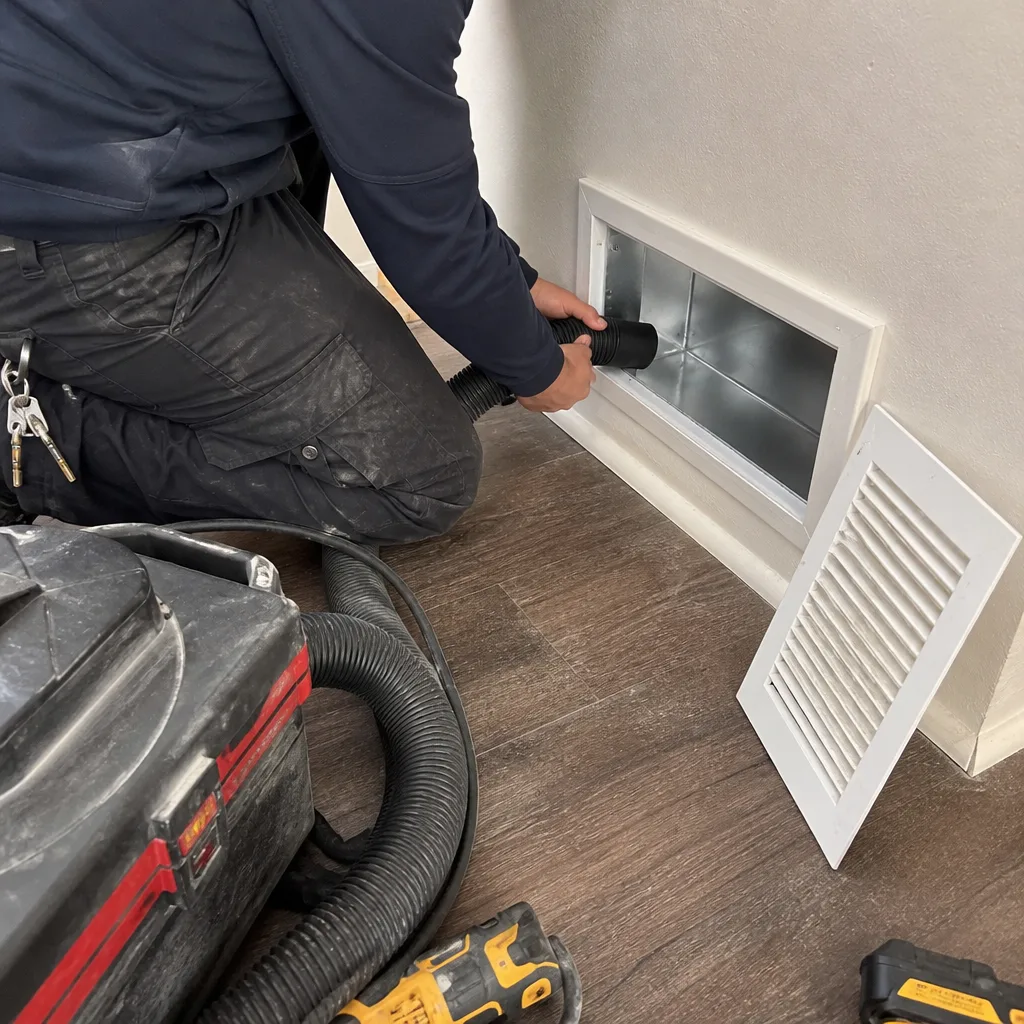
- Before and after photos. Every professional duct cleaner should document the interior of the ducts with a camera before starting and after finishing. These photos prove no equipment was added, removed, or altered. They also show the work was actually done, which addresses the industry’s biggest homeowner trust gap. In Marietta, where crawlspace humidity makes duct photos especially valuable, ask for the photo set to be texted to you the same day.
- Equipment log. The invoice should list the equipment used – a Rotobrush rotary brush system, a Nikro HEPA vacuum, or an Abatement Technologies containment unit – and note the cleaning method, like source-removal or negative-pressure extraction. That level of detail signals a professional operation and creates a record of exactly what happened inside your ducts.
- Technician name and credentials. The invoice should include the full name of the technician who performed the work and a statement that they’re background-checked and trained on the equipment listed. If the company uses uniformed technicians who identify themselves before entry, that information belongs on the paperwork too. This ties the work to a real person, which matters if a question comes up months later.
Keep this documentation with your home records. When you sell, the buyer’s home inspector will ask about HVAC history. A complete permit-exempt documentation file saves you from having to track down a contractor who changed phone numbers three years ago.
The Insurance Liability Chain: Unpermitted Work and Claim Denials
Here’s the chain of events that plays out more often than homeowners realize, and it’s worth reading carefully. Say a duct cleaning company in Marietta installs a UV purifier inside your air handler without pulling a mechanical permit. Two years later, a condensate drain backs up, water pools inside the unit, and the UV device’s wiring shorts. It starts an electrical fire in the air handler. You file a homeowner’s insurance claim for the damage to the HVAC system and the surrounding area. The adjuster asks for the mechanical permit for the UV installation. There isn’t one.
At that point, most standard homeowner policies in Georgia include an exclusion for loss caused by unpermitted work, or the carrier takes the position that unpermitted work constitutes a material change in risk that voids coverage for that loss. Either way, you’re now financing a replacement HVAC system and the fire damage out of pocket, while the contractor who installed the device is either gone, uninsured, or declaring bankruptcy. This isn’t theoretical. It’s a pattern that shows up in claim files with enough consistency that seasoned adjusters now look for it first.
The reverse chain exists too. A properly permitted and inspected UV installation, with the mechanical permit number on the invoice, gives you a clean claim path. The permit proves the work was seen by a Cobb County or Marietta inspector, the inspection date is on record, and your insurance carrier has no easy denial angle. For a job that adds maybe $150 in permit fees, that’s one of the cheapest insurance policies you’ll ever buy.
Marietta’s older homes with original crawlspace ducting are especially exposed here. Crawlspace work is where we most often see unpermitted flex duct replacement, because the work is invisible from the living space and the homeowner never visits the crawlspace. If your house was built before 2000 and you’ve never personally looked at the duct runs under the floor, there’s a real chance someone did unpermitted work down there before you bought the house. The permit search is free. The repair bill isn’t.
When Duct Cleaning Reveals a Code Violation: Your Options in Marietta
A thorough duct cleaning in Marietta will sometimes uncover problems that have nothing to do with dirt. Here are the five most common code violations we find during cleaning jobs in Cobb County, and what each one means for you:
- Improperly supported flex duct. Flex duct is supposed to be supported every 4 feet with straps at least 1.5 inches wide, and it can’t sag more than half an inch per foot between supports. In Marietta crawlspaces, we regularly see flex duct lying directly on the ground, which crushes the inner liner and restricts airflow. That’s a Chapter 6 violation, and fixing it is a mechanical repair, not maintenance.
- Missing or damaged fire dampers. In multi-story homes and any wall or floor assembly rated for fire resistance, the duct penetration needs a fire damper. If a previous remodel removed one and patched the duct with sheet metal and tape, that’s a life-safety violation. Fixing it requires a permit and an inspection, period.
- Duct tape on duct seams. Despite the name, standard gray duct tape has been banned from duct sealing in the mechanical code for years. Proper sealing uses mastic or foil-backed tape rated for HVAC. If your ducts are wrapped in gray duct tape, that’s a sign of unpermitted work or very old work.
- Crawlspace return ducts pulling air from a vented crawlspace. In Marietta’s humid summers, a return duct with a disconnected joint will draw in 80-degree, 90-percent-humidity air and deliver it straight to your evaporator coil. That’s not just a code issue – it’s a conditioning load on your system that costs you money every summer month. Reconnecting and sealing that joint is an alteration requiring a permit.
- Dryer vents terminated in the crawlspace. This is a code violation and a fire hazard, and it’s not technically part of an HVAC duct cleaning. But we find it during crawlspace work in older Marietta homes often enough that it belongs on this list. If you see it, stop using the dryer until a mechanical contractor reroutes it to an exterior vent.
When we find one of these, the customer is faced with a decision: call the previous homeowner (rarely productive), call the company that did the original work (often gone), or hire a licensed mechanical contractor to bring the ductwork to code with permits and inspections. Option three is the only one that protects your insurance and your resale value. In Marietta, that means working through one of the local mechanical contractors who pulls permits from the City of Marietta or Cobb County as a matter of routine. Ask for the permit number before the work starts. If the contractor hesitates, find a different contractor.
UV Purifiers and In-Duct Devices: The Permit Trap Most Homeowners Miss
This deserves its own section because it’s the single most common permit overshoot we see in the Marietta market, and it’s growing as more homeowners ask about indoor air quality. In-duct UV purifiers and photocatalytic oxidation units – Aprilaire, Honeywell, and other major brands make them, and Abatement Technologies makes the commercial-grade versions – are installed inside the air handler or ductwork, wired into the system’s electrical, and often integrated with the blower controls. Under the Georgia mechanical code, that’s mechanical installation work. It requires a permit. It requires an inspection. And it requires a licensed contractor to stand behind it.
What actually happens in the field is different. A homeowner calls a general handyman, or a duct cleaning company that doesn’t hold a mechanical license, and gets a UV light mounted inside the plenum in an afternoon. The device gets wired into a switched circuit, the homeowner is delighted, and the permit office never hears about it. The problem isn’t the quality of the installation – some of these jobs are done cleanly, and many aren’t. The problem is the absence of a permit record for a device that’s tied into your electrical system and operating inside your air stream.
Why does this matter in Marietta specifically? Two reasons. First, our summer humidity and pollen load make UV purifiers genuinely useful here, so the market is active and the unpermitted installations are numerous. Second, Cobb County’s appraiser office periodically audits building permits when properties change hands, and a UV installation that never appears in the permit record can surface during a sale as an unpermitted modification. That either delays the closing or becomes a price concession.
If you’re considering a UV purifier for your HVAC system in Marietta, here’s the sequence that protects you, in order:
- Choose a mechanical contractor licensed in Georgia, not a handyman or a duct cleaning vendor without a mechanical license.
- Confirm in writing that the contractor will pull the mechanical permit before installation and schedule the inspection after.
- Verify that the permit fee is itemized on your proposal – it’s usually $50 to $150 in Marietta, depending on job value.
- After installation, receive the permit number and inspection sign-off date in writing, and file that document with your home records.
- If anyone prepares to install an in-duct device without mentioning a permit, stop the job and make a phone call.
The 30 minutes of phone calls and the permit fee are a rounding error compared to the insurance exposure and resale friction you’re avoiding by doing it right the first time.
10 Questions to Ask Any Duct Cleaning Contractor Before Work Starts
Most Marietta homeowners don’t know the permit line, and too many contractors exploit that gap. For more guides & resources on protecting yourself, see our blog. These are the ten questions that separate a professional air duct cleaning company from a truck with a vacuum cleaner. Print this list. Ask every one of them. If the answers make the contractor uncomfortable, you’ve learned something valuable.
- Is your company licensed for mechanical work in Georgia, or is your scope limited to maintenance cleaning? A cleaning-only company is fine for a cleaning-only job. A cleaning company that also wants to “reconnect a duct” or “add a UV light” needs a mechanical license. One license for both is the cleanest answer.
- Will you provide a written scope of work that clearly states the job is permit-exempt maintenance before I write a check? The written scope is your documentation trail. No written scope, no job.
- Do you pull mechanical permits for duct modifications, UV installations, or other work that crosses the maintenance line? If the answer is anything other than a clear yes with specific permit office names, you’re talking to a company that doesn’t do that work legally.
- Can you cite the specific Georgia mechanical code sections that define the work you’re proposing? A contractor who knows their code can tell you Section 106.1 versus Section 106.2 without blinking. A blank stare is a blinking red light.
- What equipment are you using, and can I see it before it goes into my ducts? Professional duct cleaners run source-removal systems and HEPA-filtered vacuums – Nikro and Rotobrush are the common brands in this market. A shop-vac with a long hose is not air duct cleaning, and in Georgia it’s not good enough for a code-compliant job.
- Will you provide before-and-after photos of the interior of my ducts? In the age of phone cameras, there’s no excuse for not documenting the job. If a company refuses photos, find out why. In Marietta’s humid climate, photo proof of clean, dry ducts matters more than most homeowners realize.
- What is your total price for the full job, and is it written before any work starts? Georgia has no state-mandated price cap on duct cleaning, which means the honest contractors differentiate themselves with upfront written pricing. If the number changes at the door, the door should close.
- Are your technicians background-checked and uniformed, and will I know the tech’s name before they arrive? You’re letting a stranger into your home, often when you’re not there or when kids are home. You deserve a name, a face, and a background check in advance.
- If your cleaning uncovers a code violation like disconnected ductwork or a missing fire damper, what happens next? The right answer: the tech stops work on that section, documents it with photos, explains the finding to you clearly, and refers you to a licensed mechanical contractor for the repair under permit. The wrong answer: “we can take care of that for an extra $400.”
- Is your company insured and bonded, and can you provide a certificate of insurance with me listed as additionally insured? If the answer is anything other than “yes, and we’ll email you the certificate today,” your exposure just went up. Uninsured contractors working in your crawlspace is a medical claim waiting for a lawyer.
Common Mistakes to Avoid
- Assuming any company that shows up with a truck is licensed to modify ducts. Georgia separates mechanical contracting licenses from general business licenses. A duct cleaning company can hold a Cobb County business license and still not be authorized to disconnect, alter, or replace ductwork. Ask about the mechanical license specifically, not just the business license.
- Treating a UV purifier as a “plug-in appliance.” An in-duct UV system is mechanical work under Section 106.1, and wiring it into the air handler makes it worse. If a contractor frames it as a simple appliance installation, you’re in the permit trap described above.
- Accepting “it was always like that” when a cleaning uncovers a code violation. The previous homeowner’s handyman work does not grandfather into code compliance. Even a 20-year-old flex duct run that sags into the crawlspace dirt is a current violation if it doesn’t meet support requirements, and fixing it requires a permit.
- Paying for a repair where the contractor handles the permit “later.” In Georgia, the permit is pulled before the work starts, not retroactively when the insurance company asks. If the contractor doesn’t have a permit number on the first day of the job, the job isn’t permitted.
- Letting the permit fee argument end the conversation. A $75 permit fee on a $600 repair feels like friction, but the alternative – an unpermitted repair inside your air stream, silently voiding insurance coverage – is a real and documented risk. Pay the fee. Get the inspection. File the paperwork.
- Hiring the lowest bid without checking the scope line. A $299 whole-house duct cleaning with “reconnect and seal” hidden in the fine print is a different job than a $299 cleaning-only scope. Read the line items before the van arrives.
- Forgetting that Marietta sits in a high-humidity zone. Cobb County’s summer dew points turn unsealed crawlspace duct work into a mold incubation chamber. A code-compliant duct system in Marietta is also a humidity-management decision, and cutting corners on sealing and support has consequences that show up as black spots on flex duct liner three summers later.
See the difference
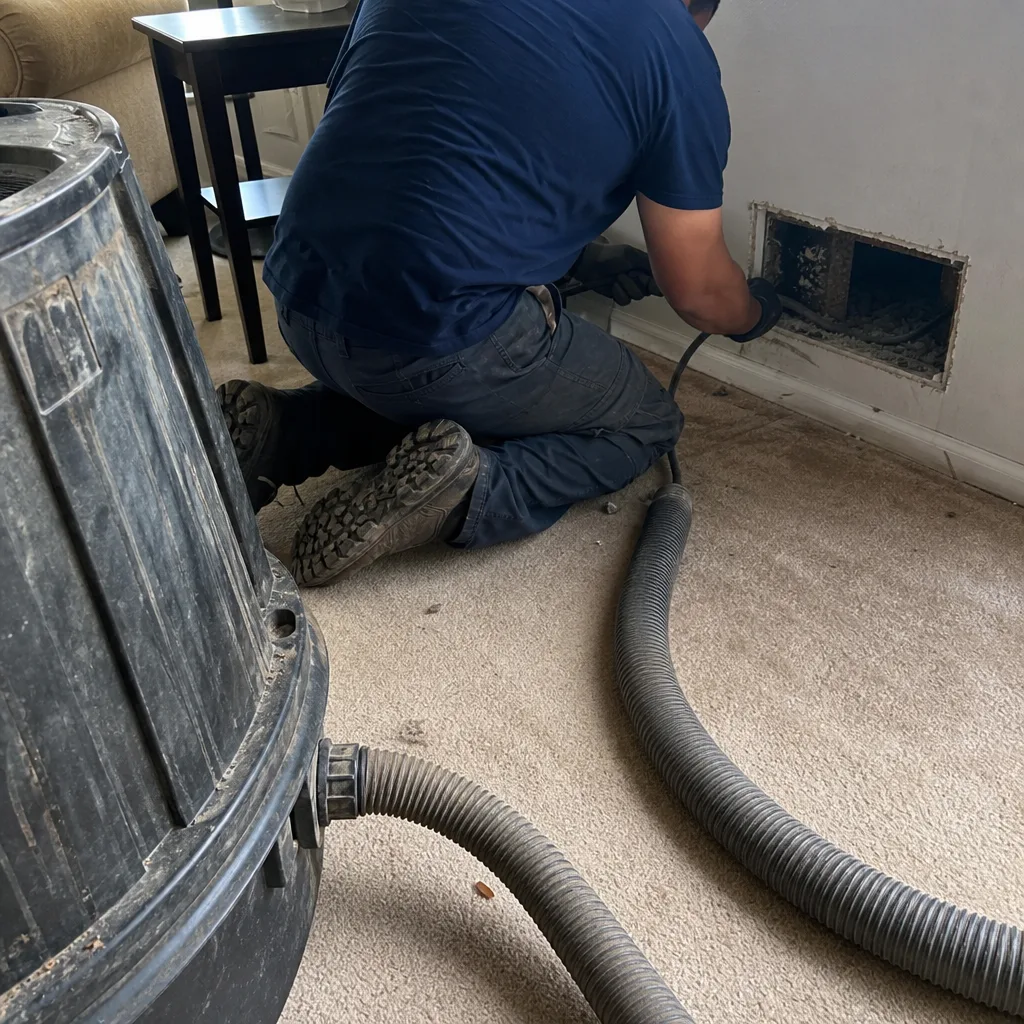 Before
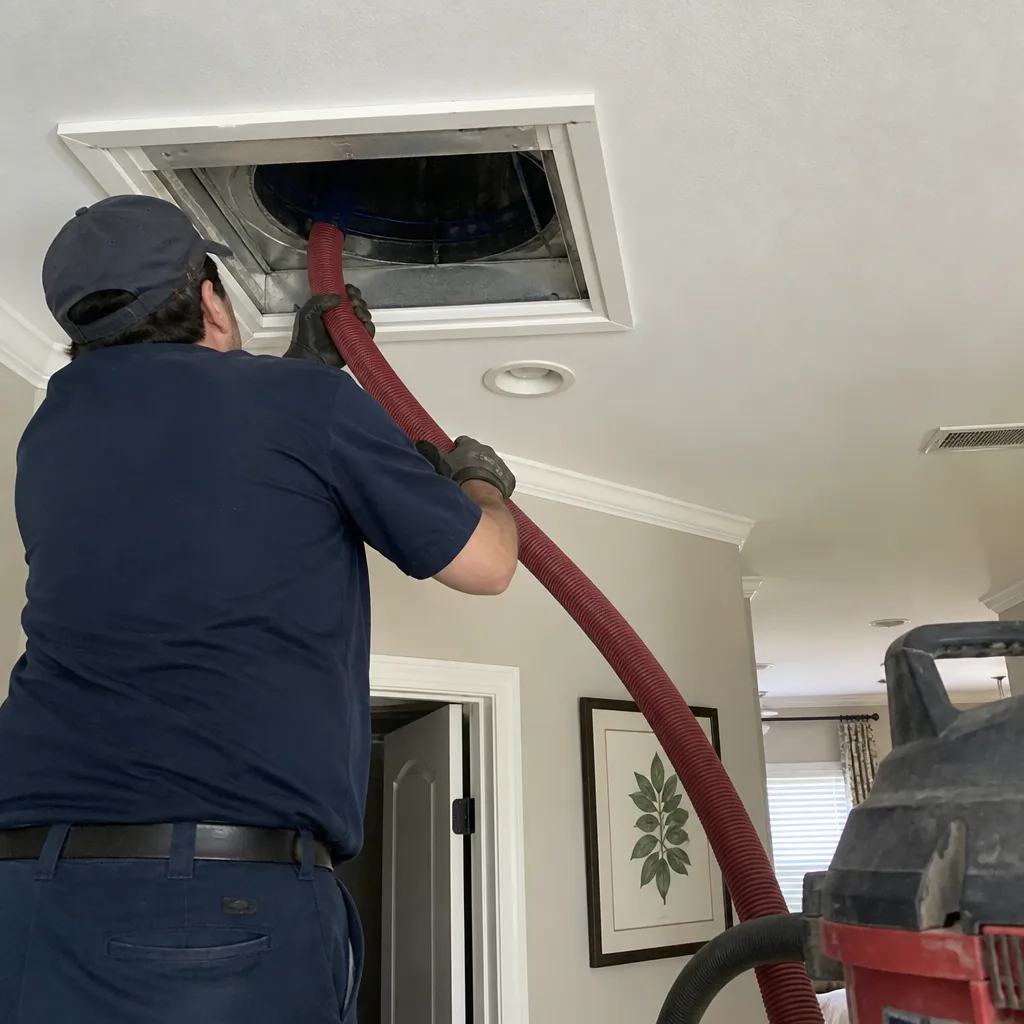 After
After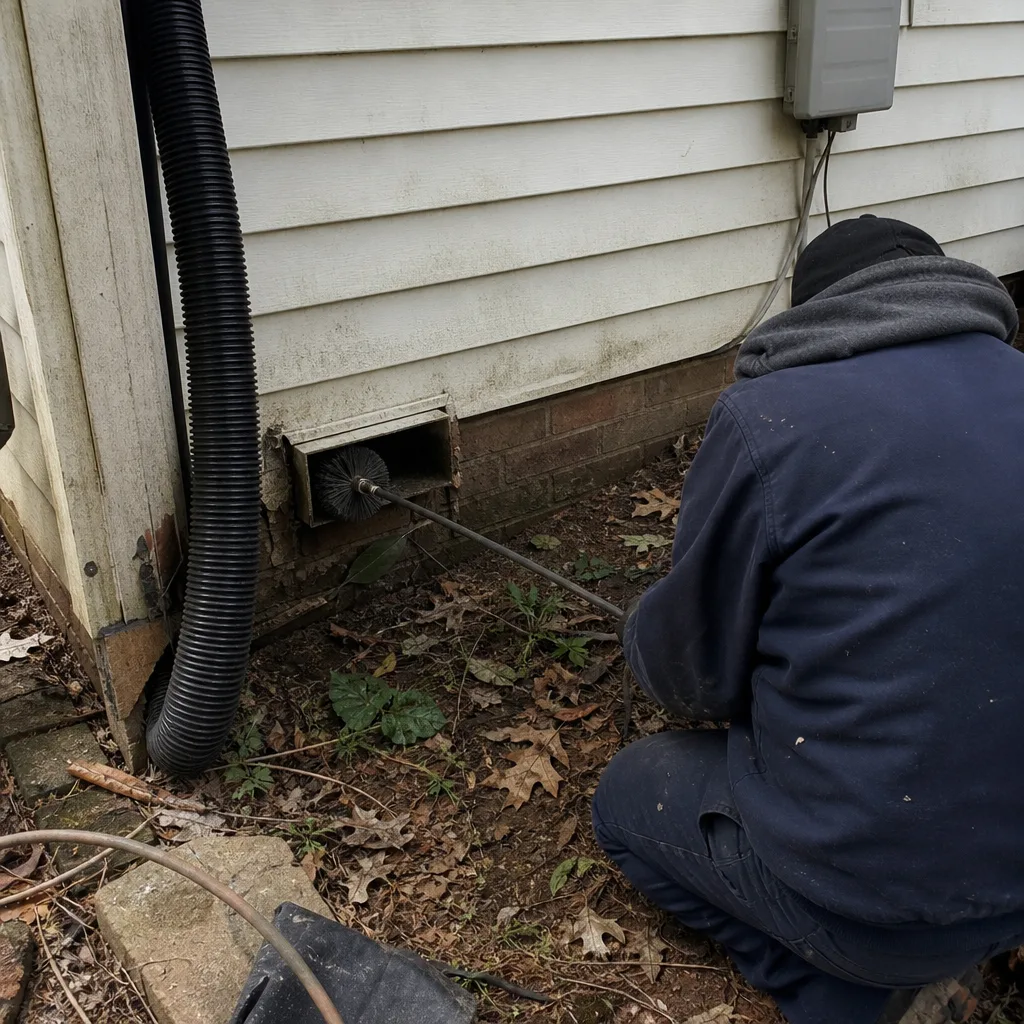 Before
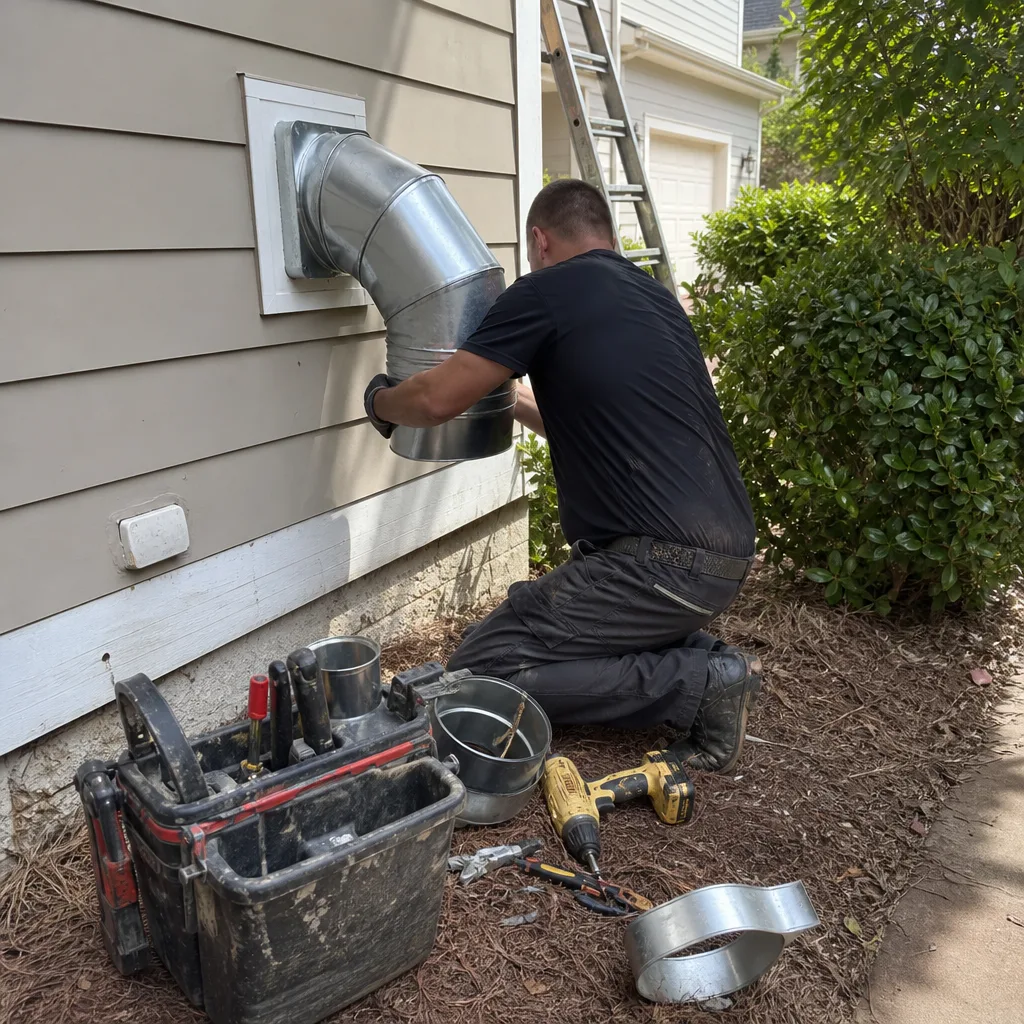 After
After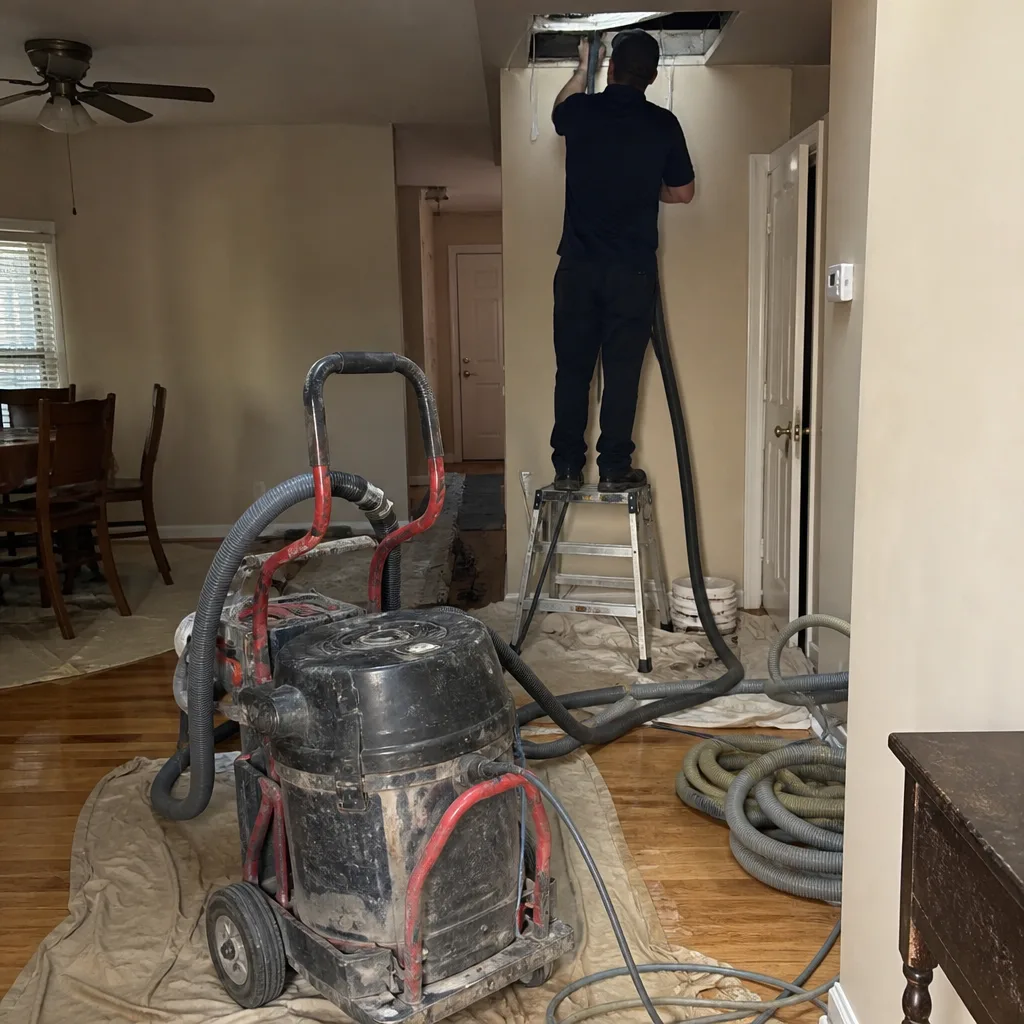 Before
 After
AfterWhen to Call a Professional
Call a licensed mechanical contractor whenever any of these specific things happen: a duct cleaning reveals disconnected, crushed, or sagging flex duct in your crawlspace; a technician recommends installing a UV purifier or any in-duct air quality device; you see gray duct tape on visible duct seams; your dryer vents into a crawlspace or attic rather than outdoors; or a home inspection flags unpermitted HVAC work before closing. In each case, the next step is a licensed Georgia mechanical contractor who pulls permits as routine practice, gets the inspection scheduled, and provides documentation for your records. If you’re in Marietta and want a professional assessment of your duct system’s condition – including a permit-exempt documentation package with before-and-after photos – Cardinal Air Duct Marietta offers free estimates. Call (762) 216-4075 and a live person answers, 24/7, not a voicemail tree.
Frequently Asked Questions
No. Air duct cleaning that stays limited to brushing, vacuuming, and sanitizing the interior of existing ducts is maintenance work under the Georgia State Minimum Standard Mechanical Code, and maintenance work requires no permit in any Georgia county, including Cobb County and the City of Marietta. A permit becomes necessary the moment ductwork is disconnected, altered, replaced, or a device is installed inside the air stream.
No license is required for the cleaning itself. Georgia’s licensing rules govern mechanical installation and alteration work, not maintenance. That said, professional duct cleaning companies in the Marietta market use commercial-grade source-removal equipment like Rotobrush rotary brush systems and Nikro HEPA vacuums, and the more reputable ones employ background-checked, uniformed technicians whose names you know before they arrive. A business license and insurance matter regardless; a mechanical license applies when the scope crosses into alteration.
The buyer’s home inspector flags the work, the buyer’s lender or insurance carrier asks for the permit record, and when none exists, the sale either stalls or you pay to bring the work to code retroactively. In Marietta’s older housing stock, this scenario plays out regularly. The fix is pulling a retroactive mechanical permit where the local office allows it, or completing a permitted repair that replaces or corrects the unpermitted work, then passing inspection. It’s faster and cheaper to fix it before listing.
For typical HVAC accessory work – duct modification, UV purifier installation, duct sealing – the mechanical permit fee in Marietta city limits generally runs $50 to $150, calculated on the job valuation. Unincorporated Cobb County’s fee schedule is similar, sometimes slightly lower. The licensed contractor pulls the permit and itemizes the fee on your proposal, and the inspection is a separate scheduling step after the work is complete.
An unpermitted UV purifier installation can trigger a claim denial if the device is later involved in a loss, because most Georgia homeowner policies exclude or limit coverage for loss caused by unpermitted work. A permitted and inspected installation, documented with the mechanical permit number and inspection date, removes that exposure. The insurance angle alone is reason enough to insist that any in-duct device installation in your Marietta home carries a real permit.
The licensed mechanical contractor doing the work is responsible for pulling the permit, and Georgia law expects the permit to be in place before the work starts. A homeowner can pull a permit for their own work in some owner-occupant situations, but if a contractor asks you to pull the permit for work they’re doing, that’s a signal the contractor isn’t licensed. Walk away. For a deeper look at the broader services connected to this topic, see our HVAC Cleaning in Marietta guide.
The Bottom Line
Georgia’s permit line is clean, even if the industry’s behavior around it isn’t. Cleaning the inside of existing ducts is maintenance, and maintenance is unregulated. Changing, adding to, or altering ductwork or the air stream is mechanical work, and mechanical work is fully regulated: licensed contractors, permits on file before the job starts, inspections after, paperwork for your home records. In Marietta’s older homes, where decades of unpermitted handyman work hides in crawlspaces, the risk of a routine cleaning uncovering a violation is real, and so is the insurance exposure from ignoring it. And remember: this guide isn’t a substitute for calling the permit office, reading your policy, or hiring a licensed mechanical contractor. It’s a starting map for knowing which questions to ask and when the answer matters. For dryer vent work or a full Cardinal Air Duct Marietta home consultation, we’re here.
Written by Omar Haddad, Owner at Cardinal Air Duct Marietta, serving Marietta since 2005.