
Last updated October 15, 2026
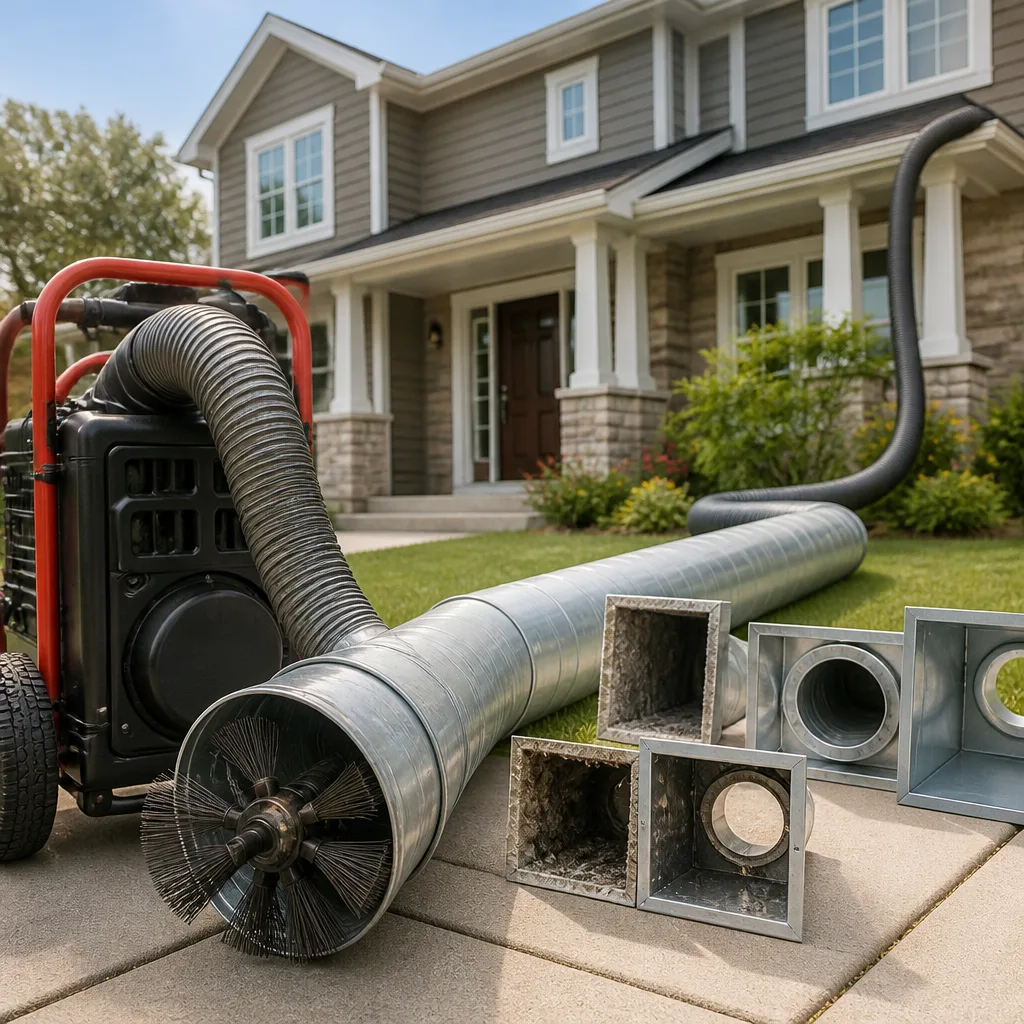 Whole-home duct cleaning
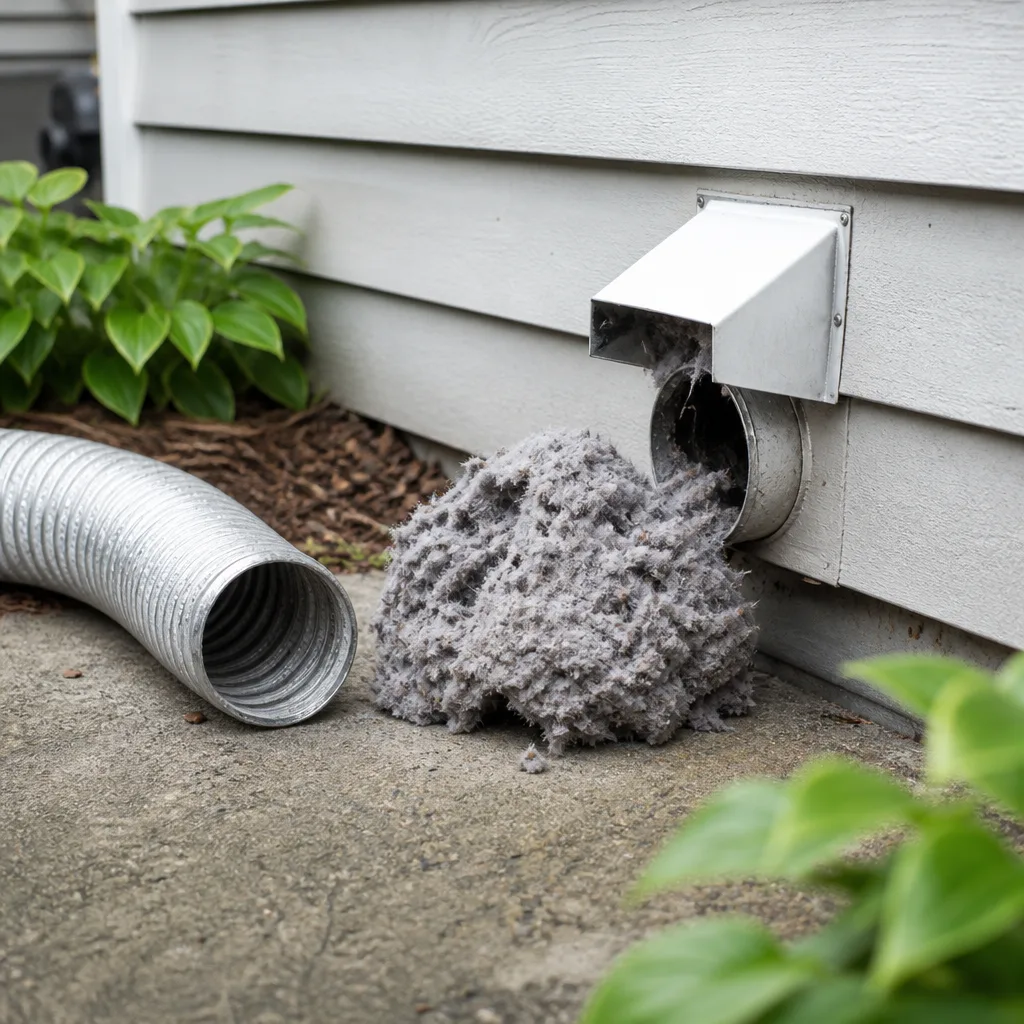 Dryer vent cleaning
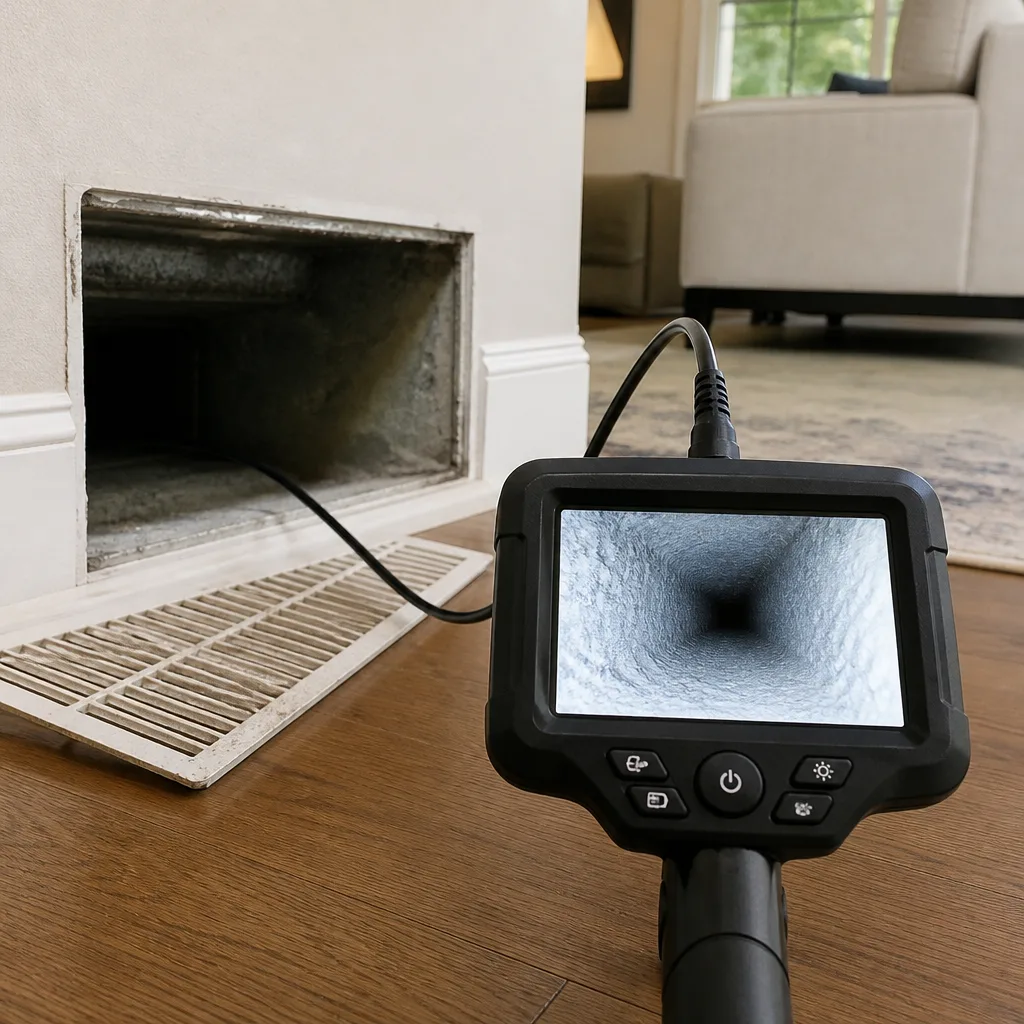 Camera inspection
 Sanitizing & deodorizing
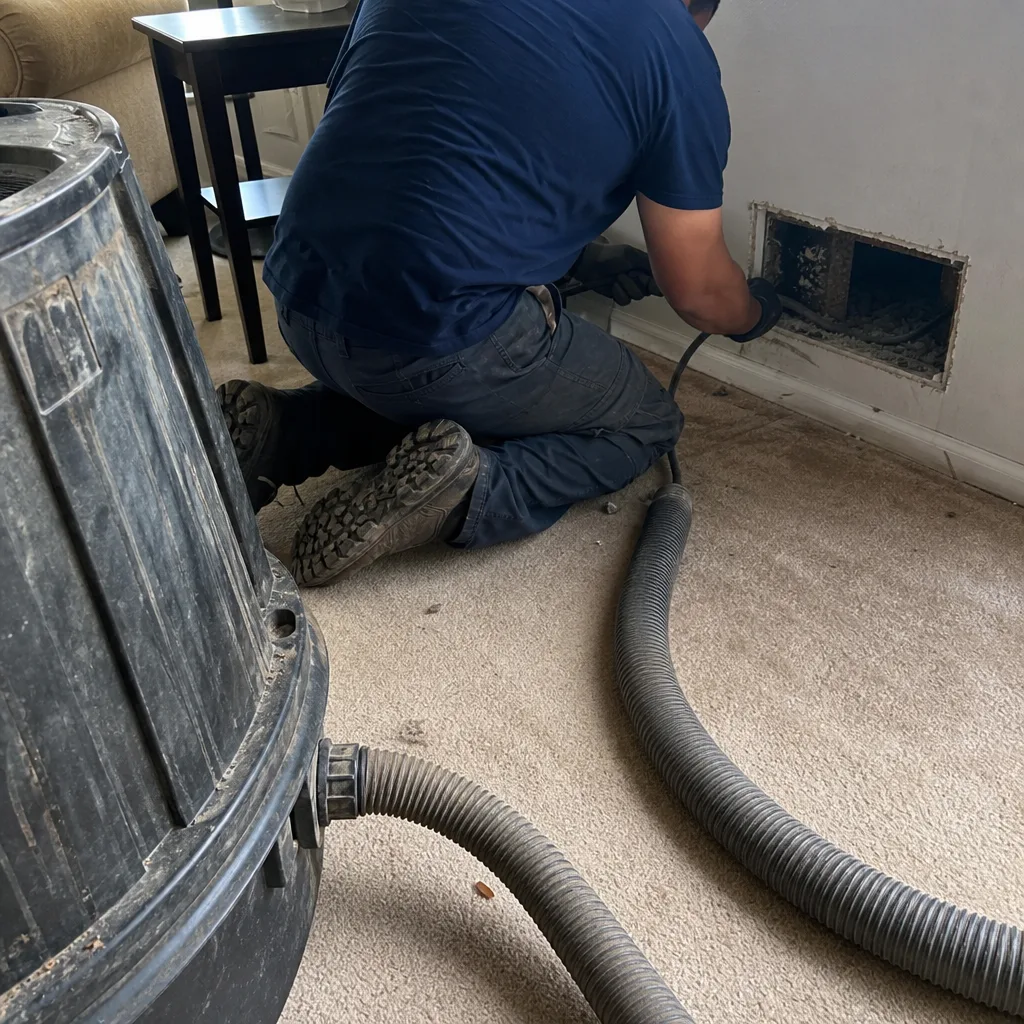
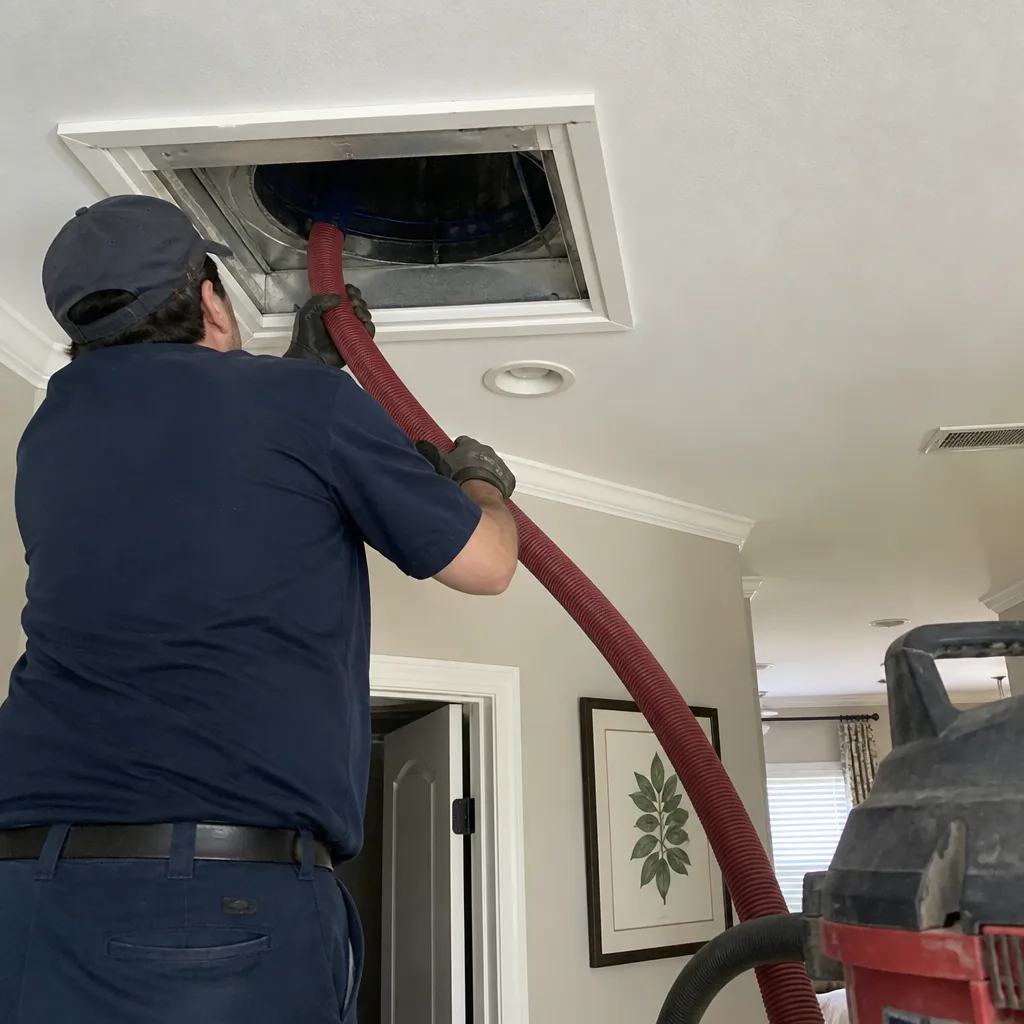
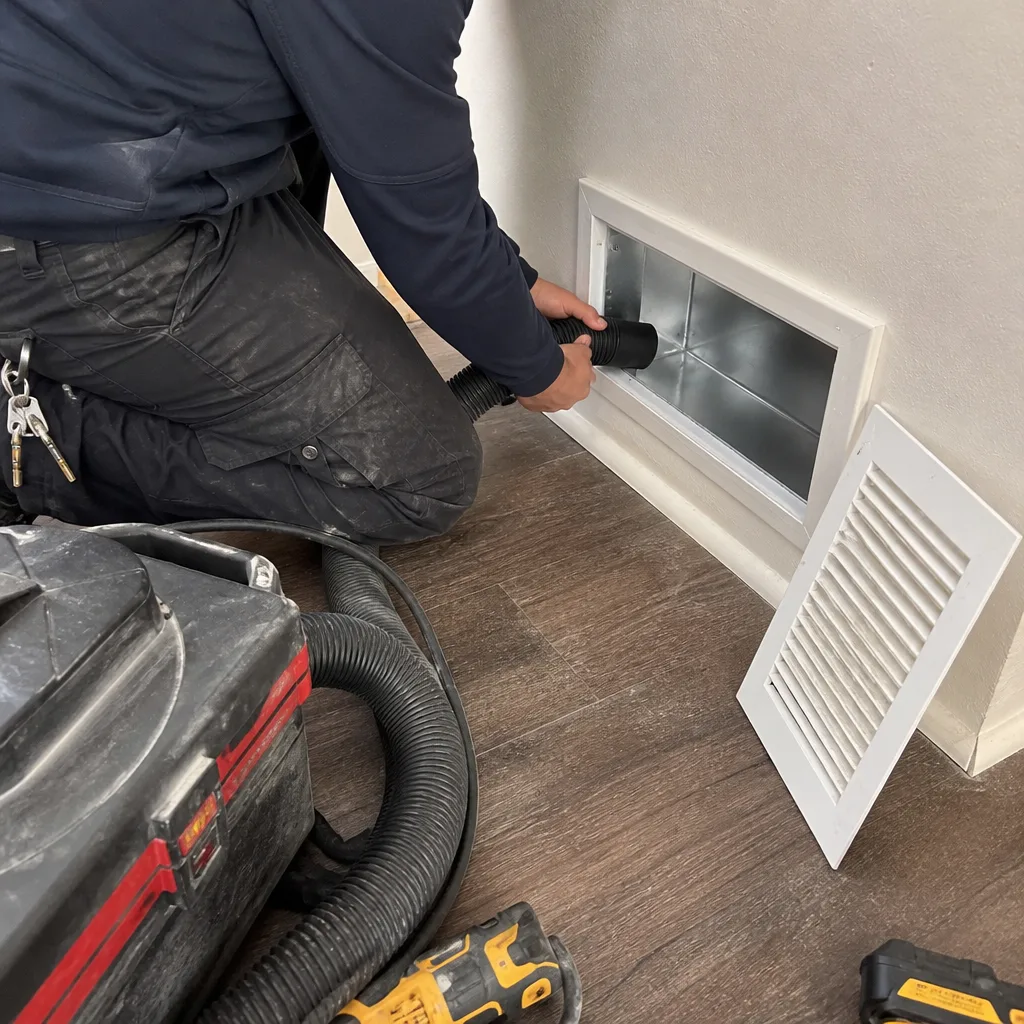
Whole-system duct and dryer vent check with before-and-after photos - you see exactly what came out of your vents
That "$99 whole-house special" is a bait ad - the real number appears once they are in your hallway, or the "clean" is a shop-vac at the register. We photograph the inside of your ducts before and after instead.
Air Duct Cleaning Warning Signs: A Marietta Homeowner’s Reference Guide
Most Marietta homeowners wait until they can smell a problem before thinking about their air ducts. That’s backwards. The most serious duct issue we encounter in Cobb County homes, active mold colonization on duct board or liner, is often completely odorless in its early stages. The HVAC system has to push enough spores into your living space before your nose registers anything at all. By the time you smell it, you’ve been breathing it for weeks. Our Complete Guide to Air Duct Cleaning in Marietta walks you through what a technician actually looks for during a walkthrough, so you can read the warning signs yourself long before a small issue becomes a respiratory problem or a four-figure repair. We built this reference specifically for Marietta homes, where summer humidity and older housing stock combine to create duct conditions you won’t find in drier climates.
Styles & brands we work with
Quick Answer
Air duct cleaning warning signs in Marietta fall into three tiers: call today (visible mold at registers, rodent droppings, water in ductwork), call this week (dust puffing from vents at startup, unexplained allergy spikes, musty odor when the AC runs), and schedule annually (dusty registers despite clean filters, rising energy bills with no other cause, reduced airflow from certain rooms). The single most reliable test takes sixty seconds: hold a white tissue at a supply register while the system runs. If it turns gray within a minute, your ducts are actively distributing contaminants.
Table of Contents
- The Three-Tier Urgency System
- The 60-Second Tissue Test
- Dust vs. Biofilm: What Color and Texture Tell You
- Marietta-Specific Warning Signs in Older Homes
- The Odor Map: What Different Smells Reveal
- The Before-and-After Photo Standard
- Common Mistakes to Avoid
- When to Call a Professional
- Frequently Asked Questions
- The Bottom Line
The Three-Tier Urgency System
Not every duct warning sign deserves the same response. We teach our Marietta customers a simple tiered system that separates true emergencies from routine maintenance. Here’s how our technicians categorize what they find during a walkthrough of a typical Cobb County home.
Tier 1: Call Today
- Visible mold at any register or return. This is never cosmetic. Mold on a register means a moisture source exists somewhere in the system, and the spores are already entering your living space. Do not run the HVAC system until a professional assesses it.
- Rodent droppings at registers or in the return plenum. Mice and rats nest in ductwork during cooler months. Their droppings dry and become airborne dust that your family breathes. This is a health issue first and a cleaning issue second.
- Standing water or active moisture in ductwork. In Marietta’s humid climate, condensation inside ducts happens, but standing water indicates a drainage failure or a leak. Mold follows moisture within 48 to 72 hours.
- A sudden, persistent burning smell when the heat runs. This can indicate debris sitting on a heat exchanger or, in the worst case, an electrical issue. Shut the system down and get it checked.
Tier 2: Call This Week
- Dust visibly puffing from supply registers at startup. That initial burst of dust when the blower kicks on is not normal. It means accumulated debris inside the ducts is being redistributed into your rooms every single cycle.
- Unexplained allergy or asthma flare-ups that improve when you leave home. If symptoms ease at work or on vacation, the trigger is likely inside your house. Duct contaminants are a common culprit we see confirmed by allergy specialists around Marietta.
- A persistent musty smell that only appears when the AC runs. This is condensation dampness inside the system. The smell is the early warning, often months before visible mold appears.
- Filter changes that never seem to last. If a fresh filter is gray or clogged at the 30-day mark, your ducts are circulating a heavy particulate load.
Tier 3: Add to the Annual Schedule
- Dusty registers despite regular cleaning. If you wipe registers weekly and they’re dusty within days, the dust source is upstream in the ductwork.
- Rooms that stay warmer in summer or colder in winter. Airflow restriction from debris buildup can make individual rooms noticeably less comfortable.
- Energy bills creeping up with no change in usage. A system pushing against restricted airflow works harder and draws more power.
- You’ve never had the ducts cleaned and the home is older than 15 years. Even without symptoms, this is a scheduling trigger, not an emergency. Every home accumulates dust; the question is volume and composition.
If you’re unsure which tier applies to your situation, a professional walkthrough costs nothing. Cardinal Air Duct Marietta offers free estimates throughout the Marietta area, and we’ll tell you honestly if cleaning is necessary or if you’re better off waiting.
The 60-Second Tissue Test
You don’t need professional equipment to get a useful read on your duct contamination level. This test takes about a minute and uses items you already have at home. Here are the numbered steps we walk our Marietta customers through over the phone when they call asking whether they actually need a cleaning.
- Turn your HVAC fan to “On” at the thermostat, not “Auto.” You want continuous airflow, not a cycle that’s about to shut off.
- Choose the supply register in your most-used room. The family room or master bedroom is ideal.
- Hold a clean white tissue about two inches from the register grate. Do not press it against the metal, just hold it in the airstream.
- Keep it there for 60 seconds. Use your phone timer if it helps.
- Examine the tissue under good light.
Reading the results: If the tissue shows a light gray film or visible specks, your ducts are moving significant particulate matter. A truly clean system will leave the tissue essentially white. If the tissue becomes covered in dark gray or black material within the minute, you’re looking at Tier 2 territory and should schedule an inspection. If you see anything that looks like insect parts, what could be rodent droppings, or fibrous material, move to Tier 1 and call a professional who can assess the full picture before you run the system again. A phone flashlight helps here too. Shine it down through the register grate at an angle to catch dust particles in the air stream. It takes a steady hand but gives you a visual confirmation of what the tissue is capturing.
For a deeper look at what a professional cleaning actually involves, read our guide to Air Duct Cleaning in Marietta.
Dust vs. Biofilm: What Color and Texture Tell You
All the material accumulating inside air ducts is not created equal. Learning to distinguish plain household dust from biofilm, a colony of mold and bacteria that grows on moist surfaces, is one of the most useful skills a Marietta homeowner can develop. Here’s how we explain the difference during our walkthroughs.
Plain Household Dust
Color: Gray to light brown. Texture: Dry, fluffy, powdery. It drifts when disturbed and collects in loose piles. Smell: None, or a faint earthy scent that’s neutral rather than unpleasant. Composition: Dead skin cells, fabric fibers, pet dander, pollen, and fine soil tracked in from outdoors. In Marietta, spring pollen loads from pine and oak add a distinctly yellow-green tint that many homeowners misread as something worse.
Plain dust is a Tier 3 issue. It reduces efficiency and air quality but poses no immediate health threat. It’s what most routine duct cleaning jobs remove by the pound.
Biofilm and Mold
Color: Black, dark green, or brownish-black. Sometimes appears as speckled patches rather than uniform coverage. Texture: Slimy or crusty when active, powdery when dried out. It clings to surfaces and doesn’t drift easily. Smell: Musty, sour, or earthy in a way that reads as “wet basement.” The smell often intensifies when the AC runs. Location: Concentrates on the cool side of the system where condensation forms, inside supply plenums, on evaporator coils, and on duct liner or duct board.
Biofilm is a Tier 1 finding. It cannot be simply “vacuumed away” with standard duct cleaning equipment. The underlying moisture source must be identified and corrected, or the mold returns within weeks. Professional remediation uses negative-pressure extraction, meaning the loosened debris goes straight into a vacuum rather than back into your living room, paired with proper containment so spores don’t spread during cleanup.
One note specific to our area: Marietta’s summer humidity means AC systems run for months at a time. Any small gap in duct insulation or a slightly oversized AC unit that short-cycles creates persistent condensation inside the ducts. That constant moisture is exactly what biofilm needs to establish itself. Homes that run a dehumidifier or keep indoor humidity below 55% rarely see this problem.
If you notice your home’s air quality feels heavier than normal even with regular filter changes, the issue may extend beyond your ducts to the equipment itself. See HVAC Cleaning in Marietta for what a full-system cleaning covers.
Marietta-Specific Warning Signs in Older Homes
Marietta is not a single housing market. The warning signs that matter in a 2015 East Cobb subdivision differ from those in a 1960s ranch near Historic Marietta or a 1980s home off Whitlock Avenue. Here are the patterns we see tied to specific construction eras and materials.
Pre-1970 homes in Historic Marietta and older sections of Powder Springs Road: These homes often still have original galvanized steel ducts if they have central air at all. Galvanized rusts from the inside when Marietta humidity combines with condensation cycles. The warning sign to watch is reddish-brown dust accumulating at registers. That’s not household dust. That’s rust particles from the duct interior, and it means the ducts are deteriorating. Some of these homes also have asbestos-wrapped duct insulation on older sections. Never disturb it. Visual inspection only.
1970s and 1980s construction across Northeast Cobb: This era introduced duct board, a rigid fiberglass panel product, as the standard duct material in our market. Duct board is excellent insulation, but its interior face is porous fiberglass. Over decades, the facing degrades, and you may notice a fine, glassy dust at registers that sparkles under light. That’s fiberglass particulate. It’s a skin and respiratory irritant, and its presence means the duct board interior has begun shedding. Duct board is also far more vulnerable to mold than sheet metal, because once moisture penetrates the facing, the fiberglass substrate holds water like a sponge.
Pre-1990 flex duct installations across West Marietta: Older flex duct has an inner liner that dries out and cracks over time. When you see gray or silver flake material at registers, you’re looking at degraded liner. This material is being pulled into the airstream and distributed through the home. It also means the duct’s insulation value has dropped, which usually shows up as rooms that never cool properly no matter the thermostat setting.
These age-related warning signs are invisible without looking inside the system. If you own a home in one of these older Marietta neighborhoods and have never inspected the ducts, or you can’t remember the last owner doing it, a free estimate that includes a visual inspection is the fastest way to know where you stand. We can usually show you the condition of your duct interiors with photos taken during the walkthrough, so you’re seeing what we see.
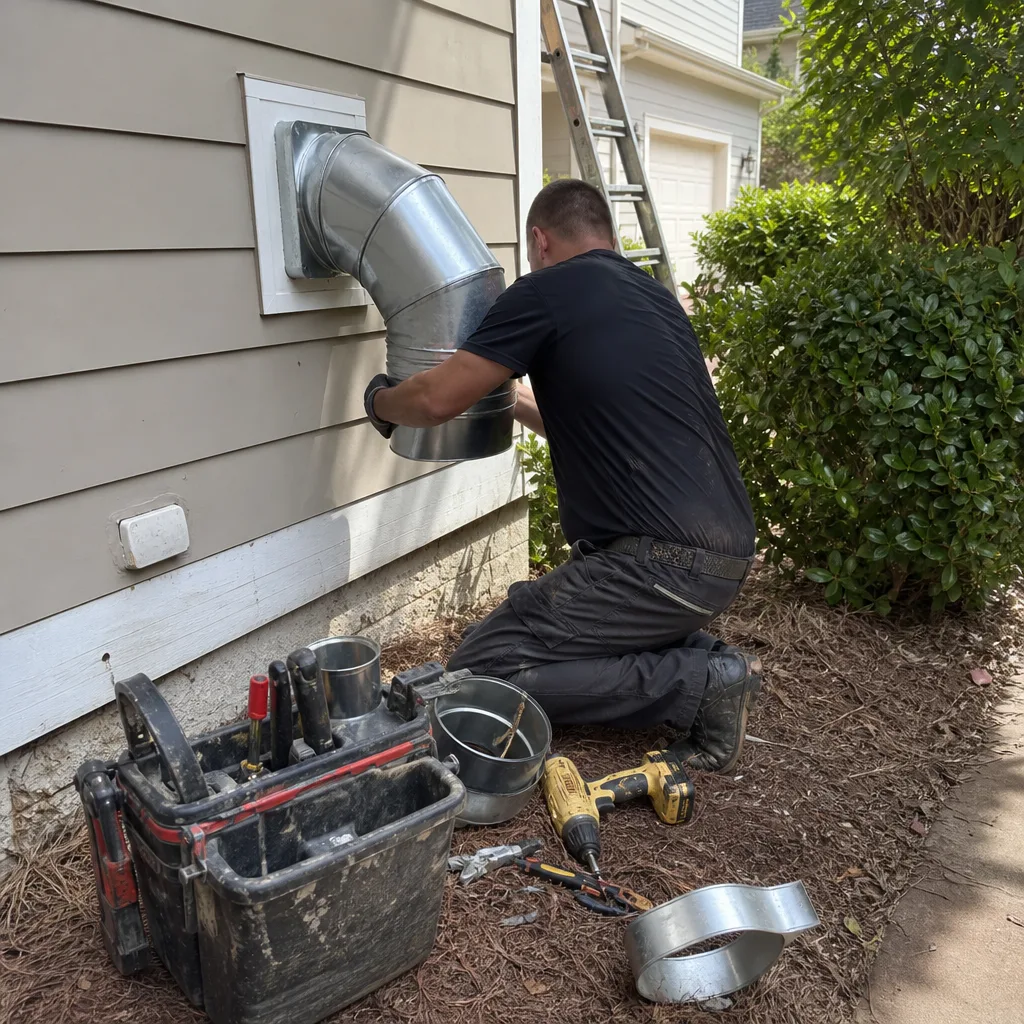
If your dryer vent hasn’t been checked either, older homes often have clogged or improperly routed dryer exhaust that compounds the issues above. See our Dryer Vent Cleaning in Marietta page for more.
The Odor Map: What Different Smells Reveal
Your nose is a diagnostic instrument if you learn to read it. Here’s a map of the most common duct-related odors we encounter in Marietta homes, organized by what each smell actually indicates, from harmless to serious.
Earthy, like wet leaves or a damp crawlspace. This is almost always the smell of accumulated organic dust plus moisture. In Marietta, where crawlspaces and basements stay damp from spring through fall, return ducts pull that moisture-laden air into the system where it settles and breeds mustiness. Tier 2: call this week. The system is holding moisture, and moisture is the precursor to mold.
Sour, like spoiled food or vomit. This is microbial activity. It’s the smell of bacteria and mold metabolizing in a moist, dark environment. If it gets worse when the AC kicks on, the source is inside the system. Tier 1. Do not keep running the system passively. Get a professional assessment.
Burning dust, like a heater firing up for the first time in winter. This is routine for the first cycle of the season. It is not routine if it persists every time the heat runs. Persistent burning dust means debris is sitting directly on a heat exchanger or on electric heating elements. It should be cleaned before it becomes a fire risk. Tier 2, moving toward Tier 1 if the smell worsens.
Oily or smoky, with no known source inside the home. Ducts can carry smells from attached garages, especially if return air is drawn through a garage wall penetration or an open doorway. In some Marietta neighborhoods with older home layouts, a return vent in a garage-adjacent wall pulls in whatever the garage has going on. Fuel, lawn equipment, paints. It’s worth checking whether your return layout is pulling from a space that should be sealed off.
Dead animal. This is unmistakable and rare, but it happens when rodents die in ducts or in the space around them. The smell is concentrated at specific registers, not distributed evenly through the house. Tier 1. The source must be located and removed, and the contaminated duct section must be sanitized. No amount of air freshener fixes it.
Faintly sweet or chemical, like acetone or paint thinner. This is not a duct cleaning issue. This can indicate a refrigerant leak from the evaporator coil or, in extreme cases, sewer gas. Shut the system off and call an HVAC technician immediately. Our technicians are trained to recognize when a “duct smell” is actually an equipment or plumbing smell, and we’ll tell you who to call next even if the work isn’t ours.
The Before-and-After Photo Standard
Here’s the uncomfortable reality of the air duct cleaning industry: the work happens inside spaces you cannot easily see. A dishonest operator can hook up equipment, run it for an hour, and hand you an invoice without touching the worst contamination. You’re left trusting a process you never witnessed. That’s why before-and-after photo documentation matters, and it’s exactly why we make it standard on every job rather than a request you have to remember to make.
Here’s what clean duct interiors actually look like in photos, and what to look for when reviewing images from any duct cleaning company in Marietta.
Before photos should show the problem, not just darkness. A legitimate before photo shows visible debris, dust accumulation, or staining on the duct surface. If all the before photos look like black voids with nothing identifiable, ask why. The technician’s inspection camera has a light. It should reveal what’s actually there.
After photos should show the same duct sections, from the same angle. This is the part most companies skip. They show a before of one register and an after of a different one. You should be able to line up the before and after and see the same space, now clean. The metal or duct board should look clean, with the seams and corners visible. If an after photo looks like a blurry dark hole, the job wasn’t documented.
Clean metal ductwork looks like dull, bare metal. No gray fuzz, no dust clumps at the seams, no debris piles in the corners. You should be able to see the joints between duct sections clearly.
Clean duct board looks flat and even in color. No damp staining, no dark patches, no peeling facing. It should look like clean fiberglass insulation, because that’s what it is.
This is the Relay Standard we operate under at Cardinal Air Duct Marietta: you get a written price before work starts, before-and-after photo proof of every job, and a digital invoice you can pay from a link. If a company won’t show you photos, or gets defensive when you ask, that’s a warning sign about the warning signs. Go to our Cardinal Air Duct Marietta home page to see how we document our work from booking to invoice.
One more note on verification. We use Nikro HEPA-filtered vacuum equipment on our jobs, which captures particles down to 0.3 microns rather than recirculating them through your home. The equipment matters. A shop-vac in a truck is not the same as a negative-pressure extraction system with HEPA filtration. Ask what equipment a company uses before booking. If they can’t name a brand, the answer is probably “whatever was cheapest at the rental counter.” We run Rotobrush rotary brush systems for agitation, Nikro vacuums for extraction, and Abatement Technologies containment units when the job calls for it. Those are specific, professional-grade tools with names you can look up.
Common Mistakes to Avoid
- Waiting for a smell before acting. Odorless mold and fiberglass shedding both reach your lungs long before they reach your nose. If you see dust at registers or experience allergy symptoms at home, the problem is already active. A visual inspection costs nothing and settles the question.
- Assuming a newer home has clean ducts. Construction debris is one of the most common findings in McMansion-era builds around Marietta. Drywall dust, sawdust, paint chips, even soda cans end up in ducts during construction and stay there. New homes can be dirtier than old ones.
- Believing a low-ball per-vent price. The classic bait in this industry is quoting a per-vent price that sounds impossibly reasonable, then telling you there are “more vents than we thought” once the technician arrives. Our advice: insist on a whole-system price in writing before work begins. Most standard air duct cleanings run $350 to $650 for a typical Marietta home, depending on size and condition. Anyone quoting significantly below that is likely to make it up once they’re inside. A company that can’t give you a written price upfront is telling you something about how they operate.
- Skipping the HVAC unit itself. Cleaning the ducts while leaving a dirty blower, coil, and plenum is like vacuuming the carpet while ignoring the pile of dirt under the couch. In our market, a proper cleaning addresses the full HVAC system, not just the branch ductwork.
- Using duct cleaning as a substitute for correcting moisture problems. If a crawlspace stays wet or a condensate drain is clogged, clean ducts will grow mold again within months. The moisture issue must be fixed or the cleaning is wasted money.
- Hiring the cheapest bid without asking about equipment or process. A company using a small portable vacuum and no agitation brush is not doing the same job as one running professional-grade rotary brushes and HEPA negative-pressure extraction. Ask what equipment they use. If they can’t answer, you have your answer.
When to Call a Professional
Call a professional today if you see visible mold at any register, find rodent droppings, smell a persistent musty or sour odor when the system runs, or notice dust actively puffing from vents at every startup. These are not do-it-yourself situations, and masking them with filter changes or air fresheners makes the underlying problem worse. Our Air Duct Cleaning services are designed to handle exactly these serious conditions safely. A walkthrough with someone who inspects ducts for a living will either confirm the issue or put your mind at ease, and neither outcome costs you anything. Cardinal Air Duct Marietta offers free estimates throughout Marietta: call (762) 216-4075 and we’ll send a background-checked technician who can show you photos of your actual duct interiors and give you a written price before any commitment.
Frequently Asked Questions
Run the 60-second tissue test described above, and look for the Tier 1 and Tier 2 signs: visible mold, rodent droppings, dust puffing at startup, persistent musty odor, or filters that clog within a month. If any of these are present, your ducts need professional attention. If you’re unsure, a free visual inspection with photos settles it.
Most standard air duct cleanings in Marietta run $350 to $650 for a typical single-family home, depending on system size, accessibility, and contamination level. Larger homes, homes with multiple HVAC systems, and jobs requiring mold remediation or rodent contamination cleanup run higher. Anyone quoting a per-vent price below about $25 per vent is likely running a bait-and-switch operation. Call (762) 216-4075 for an exact written quote, and you’ll know the full price before any work starts.
Low-ball quotes usually mean one of three things: the company uses small portable vacuums without HEPA filtration, they skip the HVAC unit itself and only do branch ducts, or they plan to upsell you heavily once inside your home. The honest range in our market reflects equipment cost, technician training, and the time required to do the job properly. A reputable company gives you a whole-system price in writing and stands behind the work for a year.
Request before-and-after photos of the same duct sections, taken from the same angles. Legitimate companies document their work this way automatically. At Cardinal Air Duct Marietta, every job includes before-and-after photo documentation, plus a digital invoice you can pay from a link. You should be able to see clean duct surfaces in the after photos, not just dark blurs.
For most Marietta homes, every 3 to 5 years is the sweet spot, though homes with shedding pets, smokers, recent renovations, or allergy sufferers may benefit from cleaning every 2 to 3 years. Homes near active construction sites, common around the rapidly developing areas of Cobb County, tend to accumulate fine particulate faster than neighborhoods that are fully built out.
If your system is over 15 years old and has never been cleaned, yes, a cleaning is worth it for efficiency and air quality even without symptoms. The average home generates and recirculates a surprising volume of dust, and a clean system runs more efficiently. But if your ducts are relatively new and you’re symptom-free, you may not need it yet. That’s exactly the distinction a free inspection can clarify.
Written by Omar Haddad, Owner at Cardinal Air Duct Marietta, serving Marietta since 2005.
See the difference
 Before
 After
After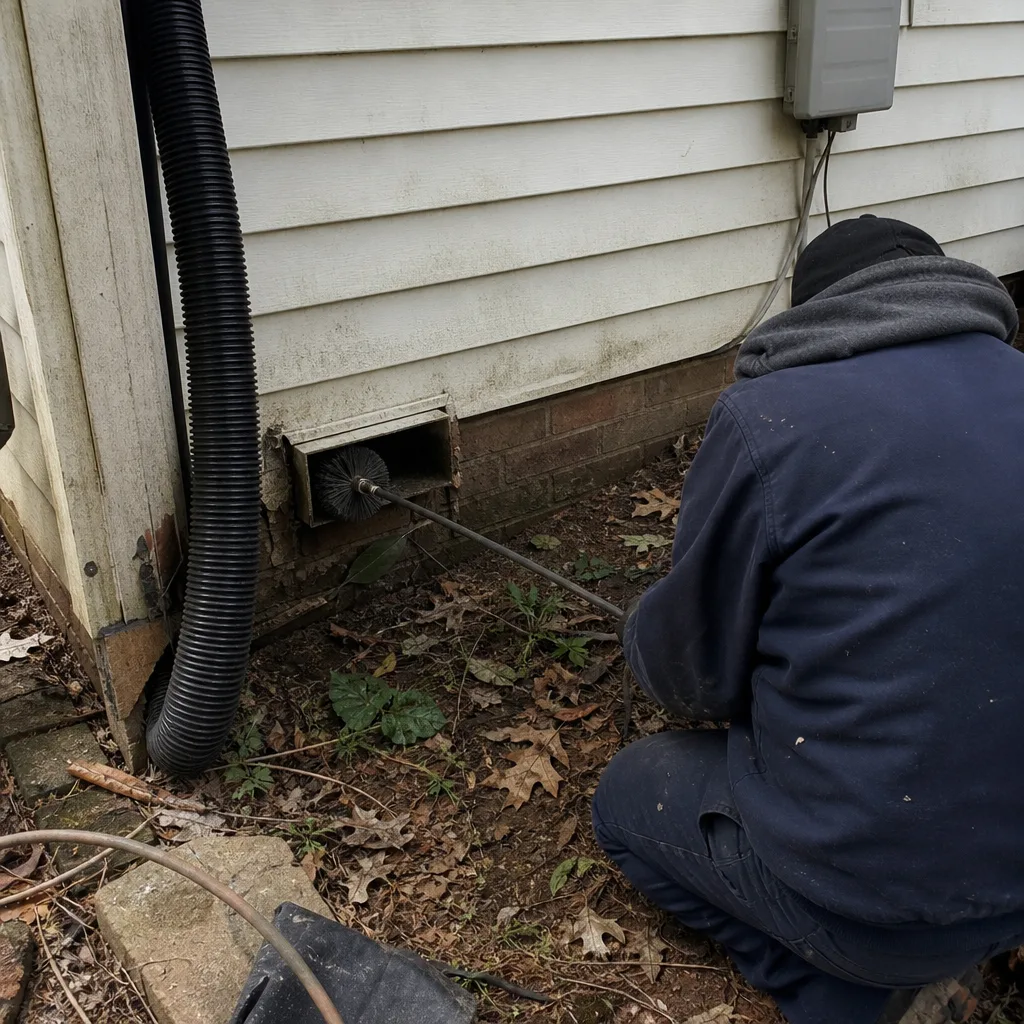 Before
 After
After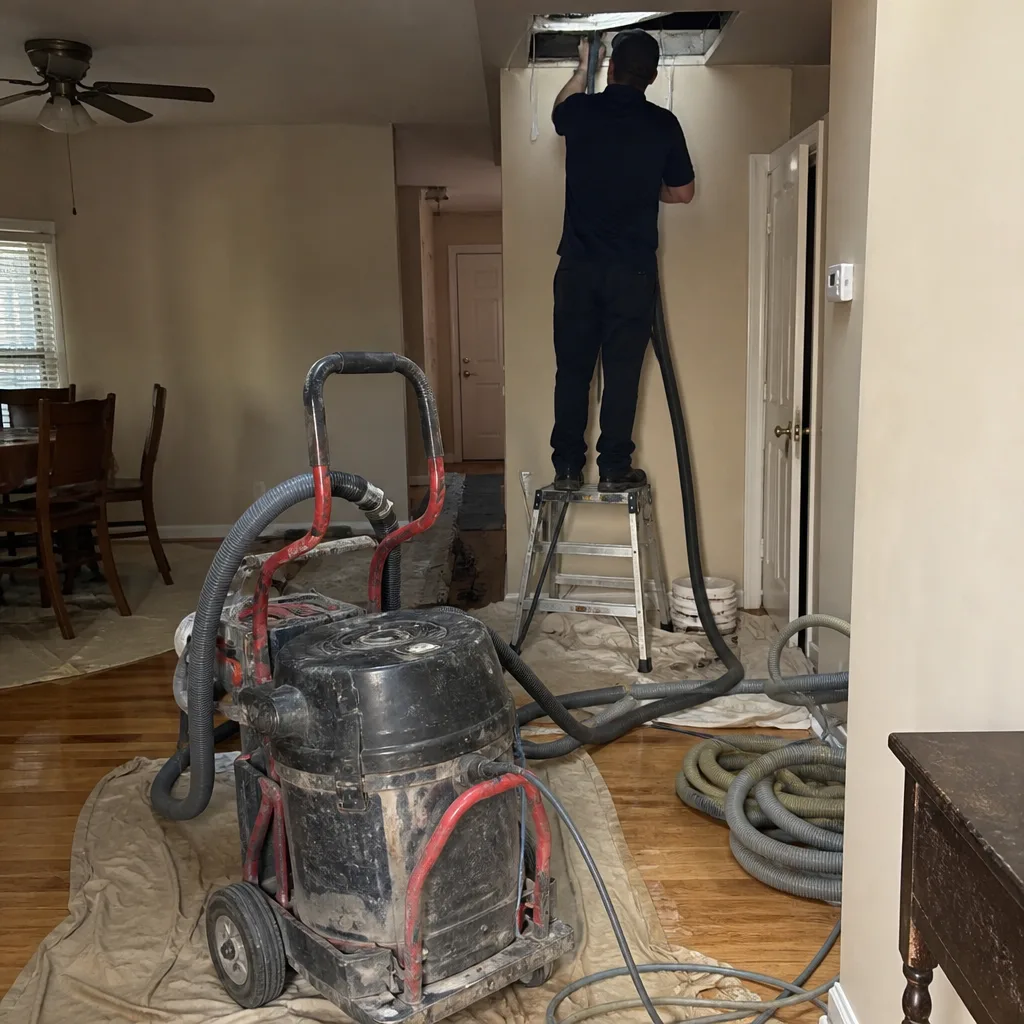 Before
 After
After