
Last updated October 15, 2026
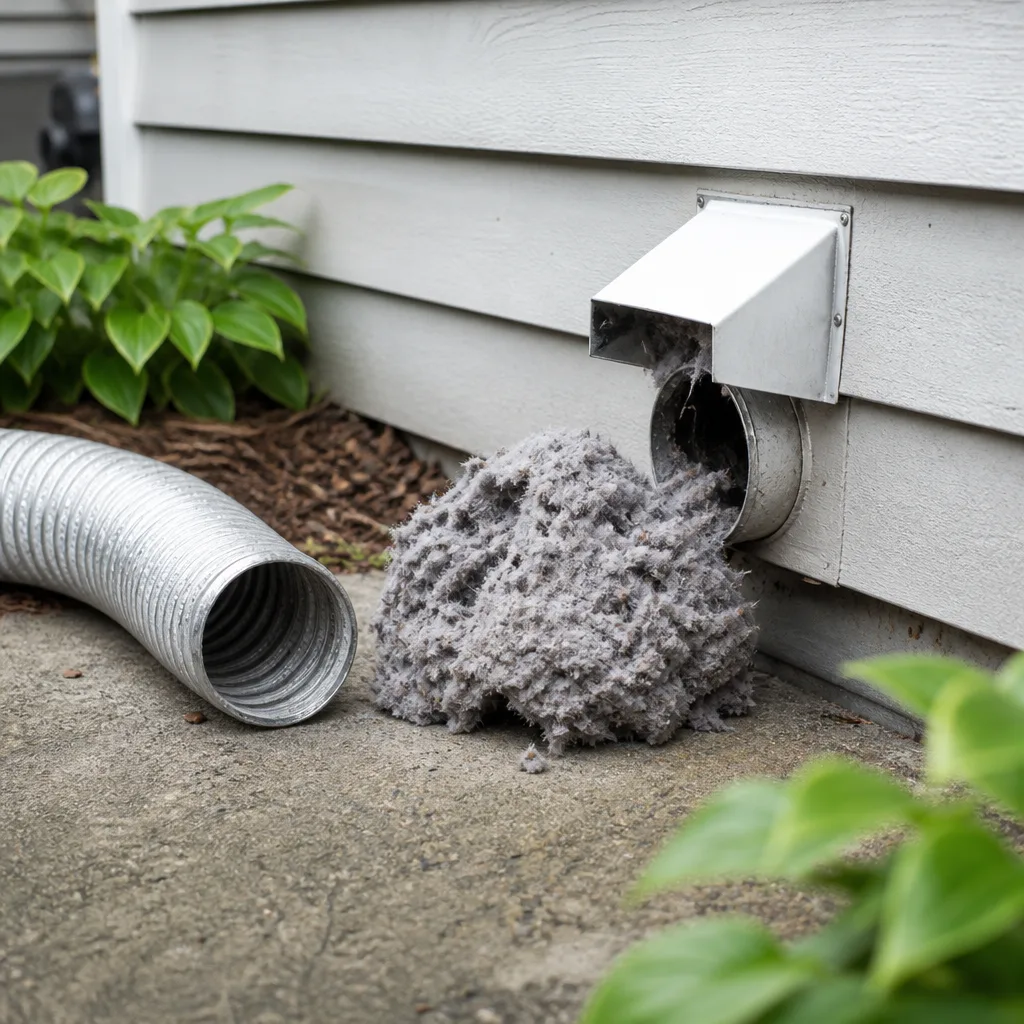 Dryer vent cleaning
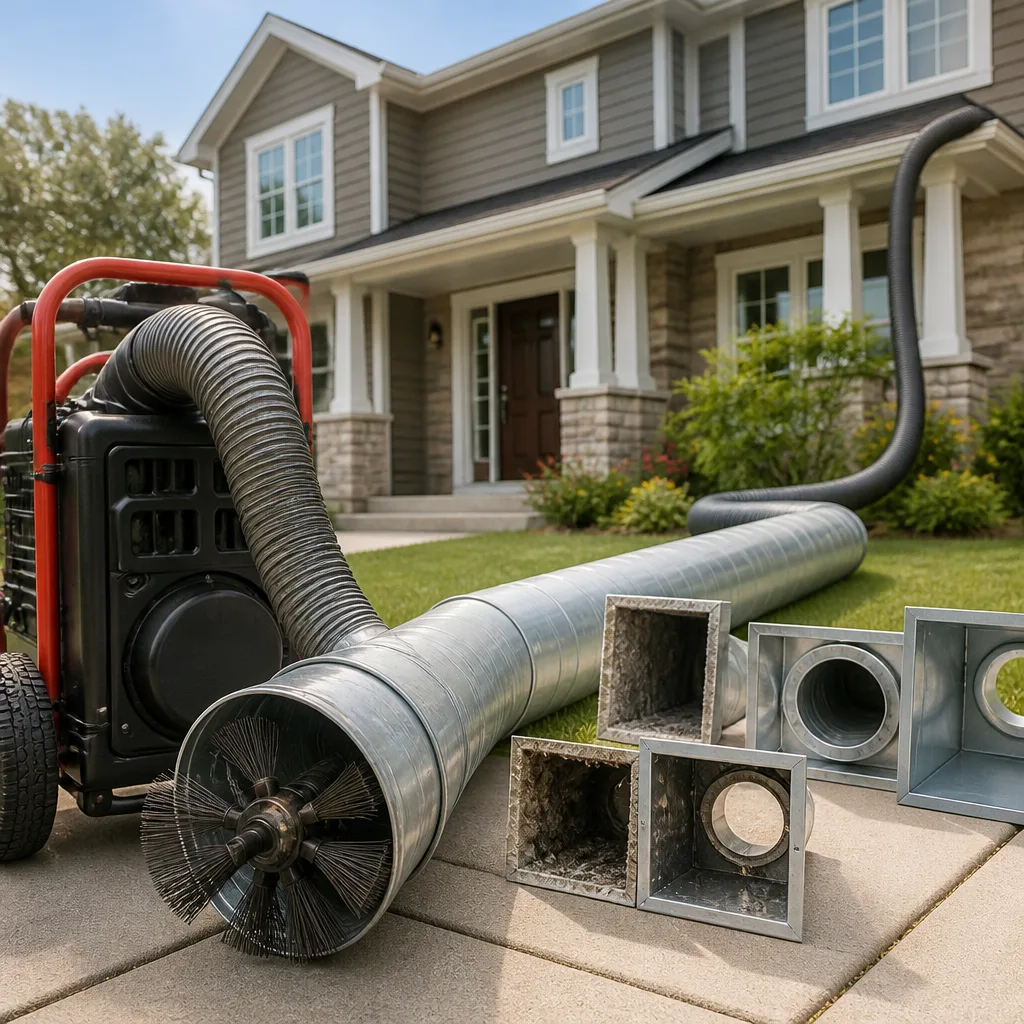 Whole-home duct cleaning
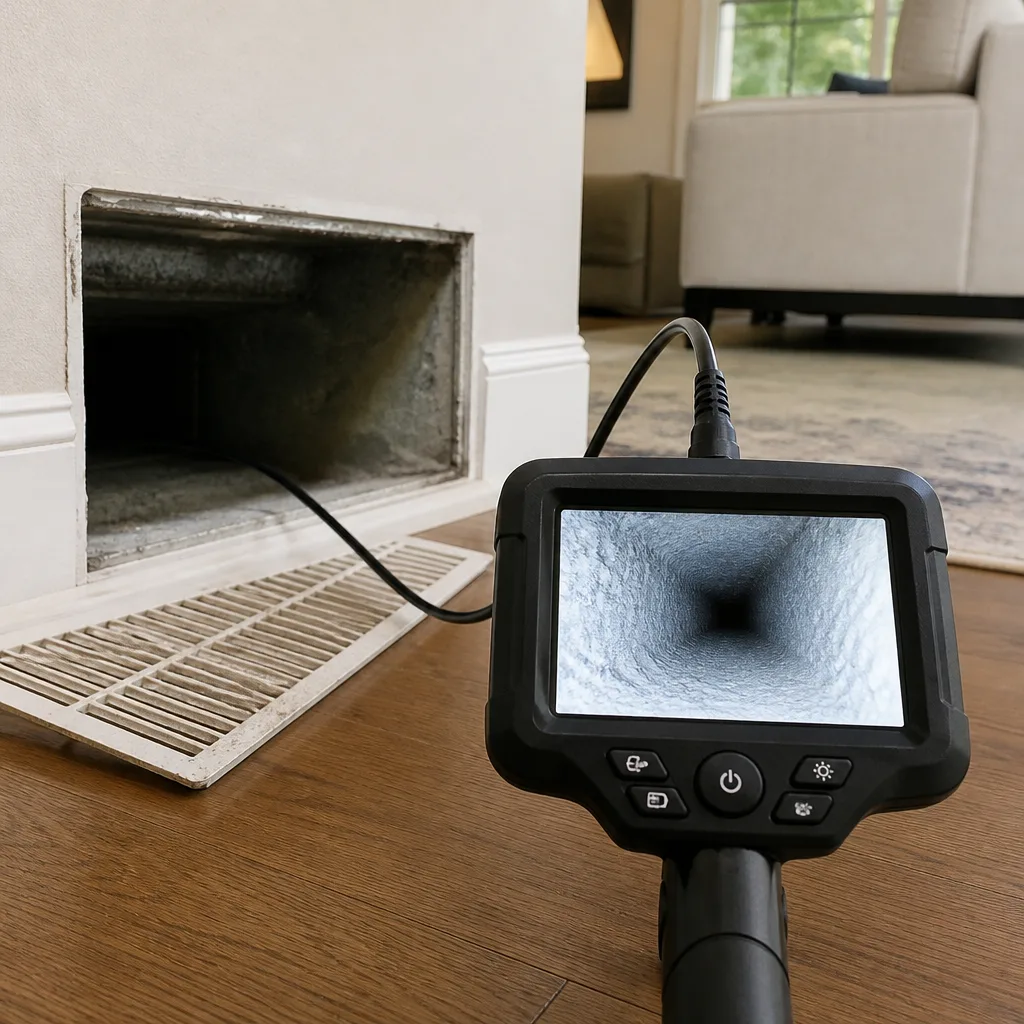 Camera inspection
 Sanitizing & deodorizing
Whole-system duct and dryer vent check with before-and-after photos - you see exactly what came out of your vents
That "$99 whole-house special" is a bait ad - the real number appears once they are in your hallway, or the "clean" is a shop-vac at the register. We photograph the inside of your ducts before and after instead.
Dryer Vent Cleaning Maintenance Checklist for Marietta Homeowners
The U.S. Fire Administration reports that dryers cause roughly 2,900 home fires every year, and the number one culprit isn’t a faulty heating element or old wiring. It’s a clogged vent run that the homeowner assumed was fine because the dryer was still tumbling. In Marietta, that assumption is more dangerous than in most places. Our humid Georgia air turns lint into a damp, sticky paste that clings to vent walls, and our housing stock, with its long second-floor runs and soffit terminations, gives that buildup more surface area to grip. This guide gives you a room-by-room maintenance checklist built specifically for Marietta homes, the warning signs that appear before visible lint does, and the exact point where a DIY inspection stops being enough and Dryer Vent Cleaning services become necessary.
Styles & brands we work with
Quick Answer
A dryer vent cleaning maintenance checklist for Marietta homeowners comes down to five tasks: check the exterior hood flap every month, run a timed airflow test every three months, inspect the lint trap housing every six months, schedule a professional rotary brush cleaning every 12 to 18 months, and clean every 6 to 12 months if your dryer lives on a second floor with a long soffit run. Marietta’s humidity compresses lint faster than the national average, so when in doubt, err on the shorter interval.
Table of Contents
- Why Marietta Homes Clog Faster Than the National Average
- The Room-by-Room Dryer Vent Checklist
- Warning Signs on the Dryer Itself
- DIY Inspection vs. Professional Cleaning: Where the Line Is
- What a Professional Cleaning Invoice Should Include
- How Often Should You Really Clean a Dryer Vent in Marietta?
- Common Mistakes to Avoid
- When to Call a Professional
- Frequently Asked Questions
- The Bottom Line
Why Marietta Homes Clog Faster Than the National Average
Two things work against you in Marietta. The first is humidity. From May through September, our outdoor relative humidity routinely sits above 70 percent. That moisture finds its way into the dryer vent run, where it mixes with lint particles. In a dry climate like Phoenix or Denver, lint stays fluffy and airborne; it moves through the pipe as loose fibers. Here, lint absorbs moisture and becomes dense, sticky, and heavier. It spreads against the vent walls like wet papier-mâché instead of blowing through as a cloud. A vent that might pass an airflow test in Arizona after 18 months can be significantly restricted in Marietta after 10.
The second factor is the housing stock. Marietta’s older neighborhoods, East Cobb, historic Marietta Square, and the 1970s ranches off Whitlock Avenue, all share a common trait: vent runs that are longer than they need to be. National fire safety guidelines recommend a maximum dryer vent run of 35 feet, with 5 feet subtracted for every 90-degree elbow. In our experience inspecting hundreds of Marietta homes, second-floor laundry closets routinely have runs of 20 to 30 feet with two or three elbows. Each elbow is a lint collection point. Each extra foot is more surface area for humid lint to cling to. A first-floor laundry room in Marietta with a straight 6-foot run through an exterior wall is a completely different animal from a second-floor closet venting through the soffit above a bedroom window. The first might tolerate annual cleaning. The second needs attention every 6 to 8 months.
The Georgia climate also plays a role in how lint clumps. When a hot dryer pushes warm, moist air into a vent pipe that runs through an uninsulated attic, the temperature differential causes condensation inside the pipe. That condensation acts like glue. Lint that would otherwise pass through gets trapped, layer after layer. Over time, the effective diameter of the vent shrinks. The dryer works harder. The cycle runs longer. And the accumulation problem compounds.
The Room-by-Room Dryer Vent Checklist
This checklist is organized by where the work happens, not by an abstract schedule. Walk through each zone in order. It takes 15 minutes if you know what you’re looking for.
1. The Laundry Room: Inside the Dryer
- Pull the lint trap. If the mesh screen has a layer of lint that feels damp or has a greasy sheen, that’s a Marietta humidity indicator. Dry climate lint is fluffy. Ours is clumpy.
- Look into the lint trap housing with a flashlight. The housing is the cavity the screen slides into. If you see lint built up on the walls of the cavity, it’s already bypassing the trap. That lint is heading into the vent pipe.
- Run the dryer empty on air-only for 60 seconds. Stand at the exterior vent opening while it runs. The airflow should be strong enough to lift a piece of paper at least a few inches. If there’s no exterior access, check the wall connection behind the dryer for subtle air leaks or a burning smell.
- Check the flexible transition duct. The transition duct is the short hose connecting the dryer to the wall. In Marietta code-compliant installations, this should be rigid metal, semi-rigid aluminum, or UL-listed flexible metal. If you see white plastic or foil, it’s a fire hazard and a code violation. Replace it with a metal product, and keep the run as short and straight as possible.
- Verify the dryer is pushed back without kinking. A common issue in compact Marietta laundry closets: the dryer gets pushed too far back, kinking the transition duct behind it. A kinked duct can reduce airflow by 50 percent or more.
2. The Exterior Vent Hood
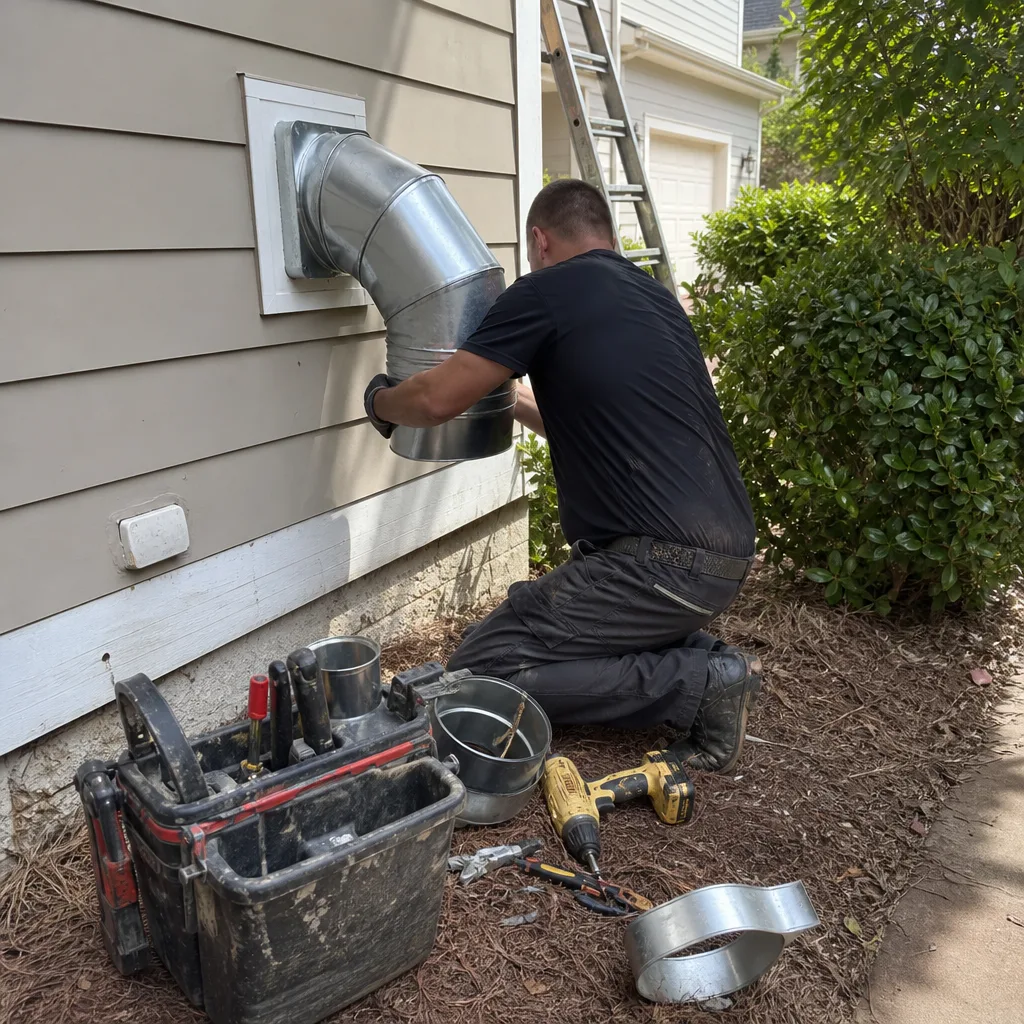
- Locate the vent termination. In a single-story Marietta ranch, it’s usually a 4-inch hood on an exterior wall. In a two-story home, it may terminate in the soffit under the roofline. Some older Marietta homes vent into the crawlspace or attic, which is a significant fire hazard.
- Inspect the hood flap. The flap should open freely when the dryer runs and close fully when it stops. If the flap is stuck open, birds, rodents, and humid outside air are entering the vent. If it’s stuck closed, the dryer is exhausting against a closed door, which means zero airflow.
- Check for visible lint. Lint hanging from the hood or scattered on the ground below is a late-stage warning sign. If you can see lint outside, the clog inside is already substantial.
- Listen for the flap. When the dryer runs, the flap should move enough to produce a rhythmic flapping sound. No sound could mean no airflow. Constant loud flapping could mean the flap needs replacement.
3. The Vent Run Itself: What You Can’t See
Here’s where Marietta homeowners need to be honest with themselves. The majority of the vent run is hidden inside walls, floors, and ceilings. You can’t see the 18 feet of 4-inch pipe running through your walls. What you can do is look for indirect evidence:
- Warmth on the wall or ceiling along the vent path. Place your hand on the drywall directly above or beside the known vent run while the dryer is running. If the surface feels warm, heat is backing up through the pipe and radiating through the wall. That’s a restriction.
- Condensation or discoloration on the vent path. Any moisture staining on the ceiling near a soffit vent or on a wall near a floor vent suggests restricted airflow is allowing condensation to form and soak through.
- Burning or laundry detergent smell along the run. A hot, restricted vent lets odor penetrate the pipe walls. If the upstairs hallway smells faintly of fabric softener or scorched dust when the dryer runs, you have a buildup problem.
Warning Signs on the Dryer Itself
Most homeowners in Marietta assume a problem becomes visible before it becomes dangerous. That’s backward. By the time you see lint at the exterior hood or smell burning, the vent has been compromised for months. The earliest warning signs show up on the dryer, and they’re easy to misread as an aging appliance.
Cycle Times Over 45 Minutes
Modern dryers have moisture sensors that shut the cycle off when clothes are dry. Those sensors don’t know why the clothes are taking longer to dry; they just keep the dryer running until the job is done. If your dryer takes 50 to 60 minutes for a normal load of jeans and towels, the vent is restricting airflow. The dryer’s heating element is doing its job. The exhaust path is not. This is the single most reliable early warning sign, and it’s present weeks or months before visible lint appears anywhere.
Clothes Hotter Than Normal
A properly vented dryer produces hot air that flows across the clothes and out of the machine. A restricted vent traps that hot air inside the drum. If your clothes come out unusually hot at the end of the cycle, or if the outside of the dryer is hot to the touch, the heat is not being carried away. That trapped heat is exactly what turns a lint blockage into a fire.
A Heat Smell in the Laundry Room
Faint burning smells during a cycle aren’t always lint fires in progress. But they’re often lint exposed to the heating element or exhaust air backing up into the room. If you smell heat or scorched dust, stop the dryer and address the vent before running another load. The heating element on a gas dryer can reach high temperatures, and lint inside the cabinet is combustible.
The Dryer Shuts Off Mid-Cycle
Many newer dryers have thermal fuses that activate when temperatures inside the cabinet exceed a safe threshold. If your dryer has started shutting itself off mid-load and restarting later, it’s tripping its own safety mechanism. The appliance isn’t broken; it’s telling you the vent is blocked. Replacing the fuse without cleaning the vent just sets up the same failure again.
If you’re seeing any of these signs, the most important next step is to stop running the dryer until the vent is inspected. Our Dryer Vent Cleaning in Marietta service starts with a full airflow assessment, not just an equipment visit. We measure the air moving through the system before and after the cleaning so you see the improvement in numbers, not just words.
DIY Inspection vs. Professional Cleaning: Where the Line Is
There’s a difference between inspecting a vent and cleaning it. Inspecting is a homeowner job. Cleaning is where the line gets drawn, and it gets drawn sooner in Marietta than in most cities because of the humidity factor described above.
What a Homeowner Can Safely Do
- Pull and clean the lint trap after every load, not just when it’s visibly full
- Inspect the exterior hood once a month for flap function and visible lint
- Feel the wall or ceiling along the vent path for heat while the dryer runs
- Run a timed airflow test: a standard load of bath towels should dry in under 40 minutes
- Vacuum the lint trap housing every 3 to 6 months using a crevice tool
Where the Line Is: When You Need Professional Equipment
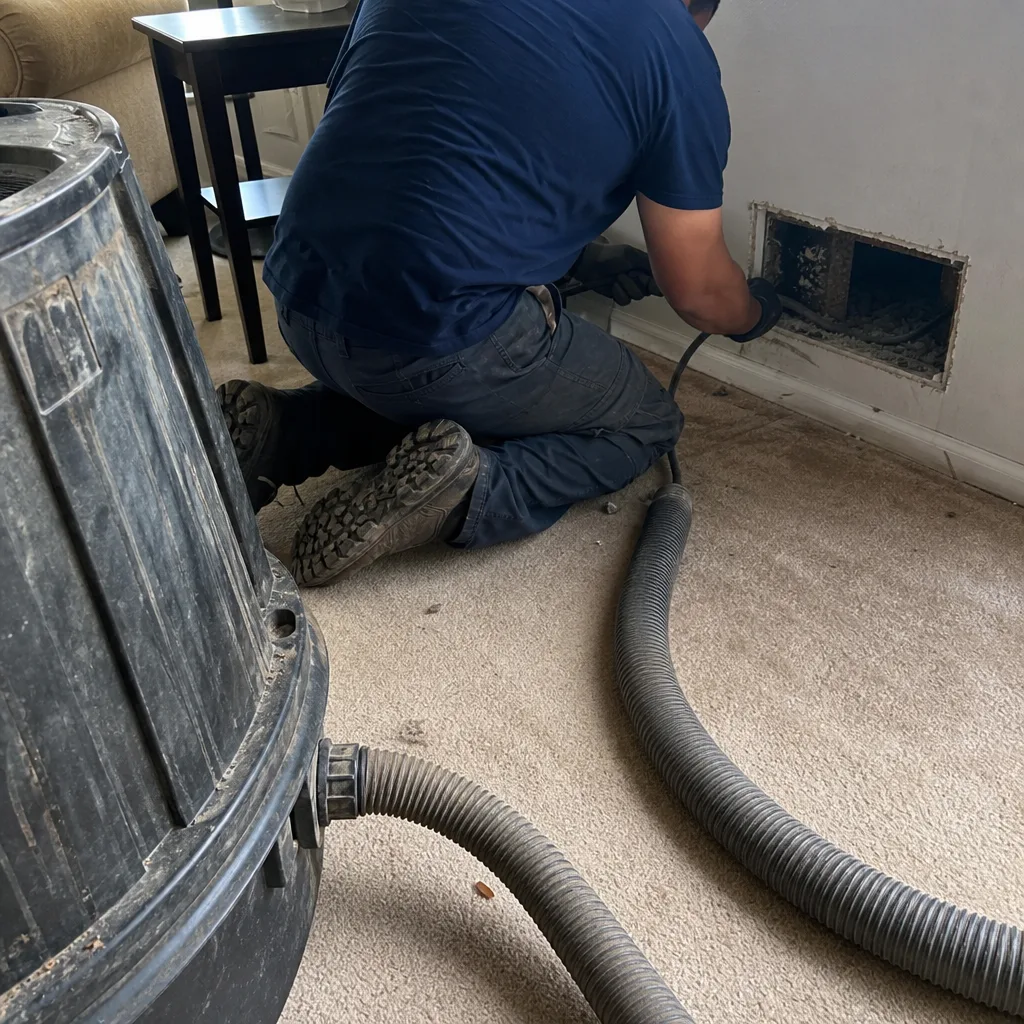
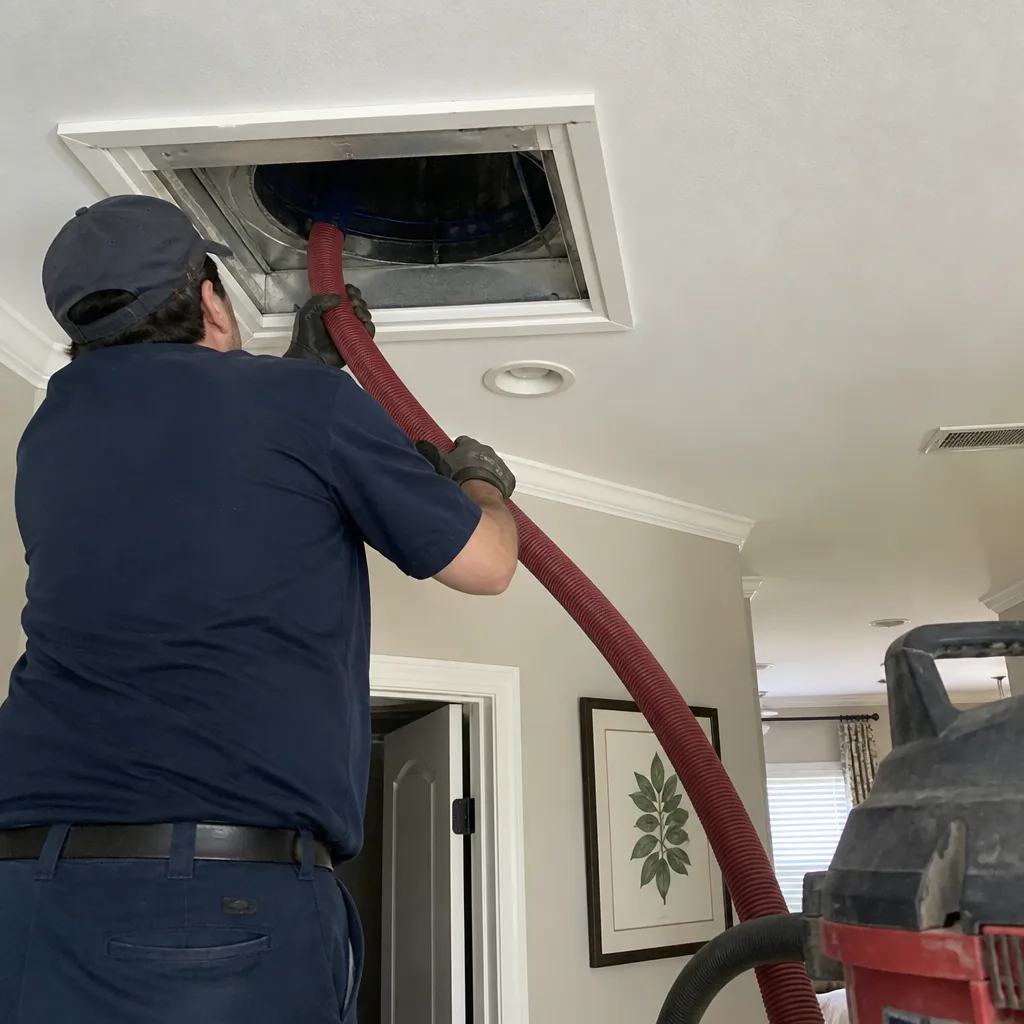
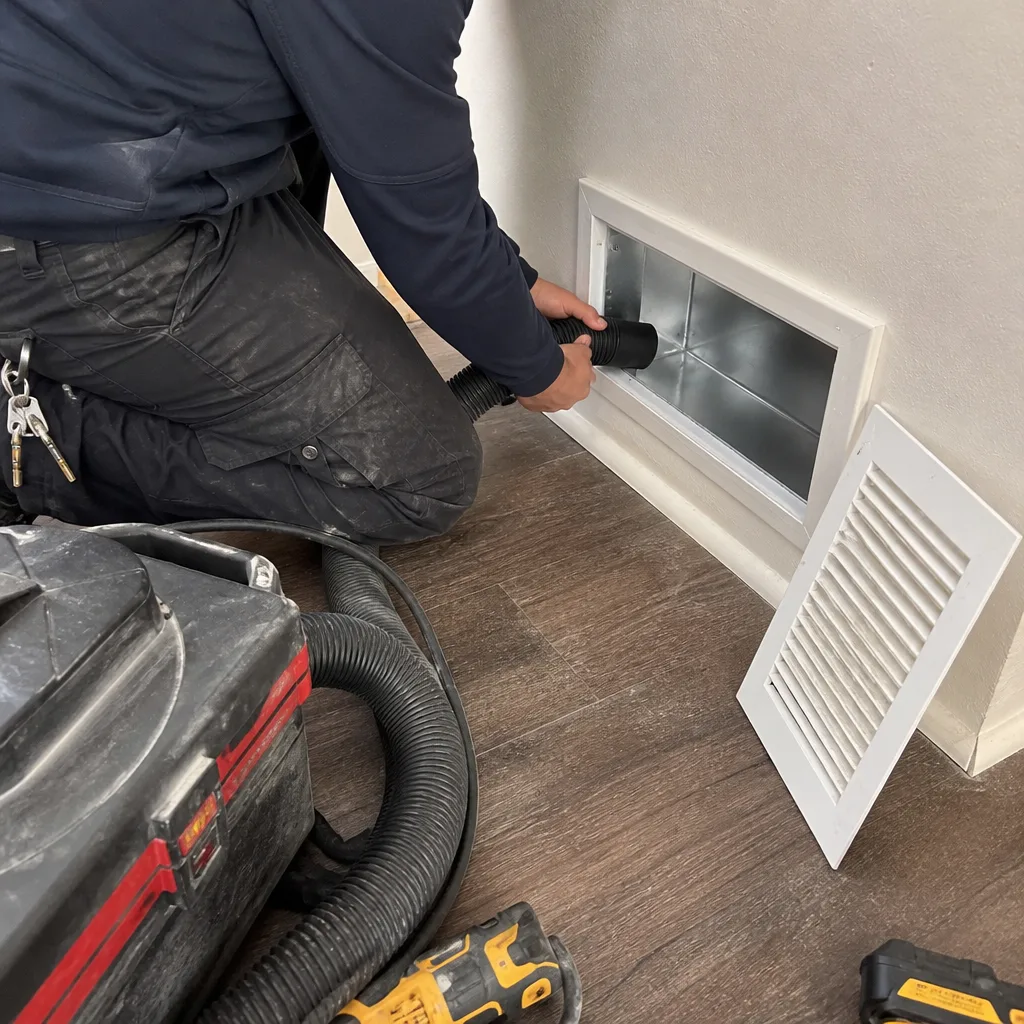
Once lint builds up inside the 4-inch vent pipe itself, no homeowner tool reaches it effectively. A leaf blower or a shop vac connected to the interior end may dislodge the loosest material near the connection, but it won’t remove the hardened, moisture-caked lint that our Georgia humidity creates. That material is bonded to the pipe walls. It requires rotary brush agitation, the kind done with a Rotobrush system, which spins stiff nylon bristles against the pipe walls while a HEPA-rated Nikro vacuum simultaneously pulls loosened debris out of the run under negative pressure. Negative-pressure extraction means the loosened debris goes straight into the vacuum, not back into your living room. This is the professional standard, and it’s the only reliable way to clean a vent run longer than a few feet.
For a deeper look at how this connects to the larger air system, our Air Duct Cleaning in Marietta page explains the relationship between dryer vents and the rest of the home’s exhaust pathways.
What a Professional Cleaning Invoice Should Include
The duct cleaning trade has a reputation, and Marietta homeowners who’ve been burned by it-perhaps because they didn’t read How to Hire a Air Duct Cleaning Contractor in Marietta: A Step-by-Step Guide-know what we’re talking about. A technician shows up, hooks up a vacuum, runs it for 20 minutes, writes “vent cleaned” on an invoice, and leaves. You pay. The dryer still takes 50 minutes to dry a load. Nothing changed.
A professional dryer vent cleaning in Marietta should produce a measurable result, not just a service description. Here’s what a legitimate invoice includes:
1. Before and After Airflow Readings in CFM
CFM stands for cubic feet per minute, and it’s the air volume moving through the vent. A standard 4-inch dryer vent in good condition with a 10-foot straight run should move somewhere in the range of 100 to 120 CFM. A moderately clogged vent might drop to 40 or 50 CFM. After a proper cleaning, it should return to 90 CFM or better. If the company can’t give you a before number and an after number, you have no evidence the cleaning did anything. Airflow before the service tells you how bad the clog was. Airflow after tells you whether the technician finished the job.
2. A Description of the Method, Not Just a Signature
The invoice should say something like “rotary brush cleaning with HEPA vacuum extraction” not just “cleaned vent.” The method matters because it tells you whether the technician actually agitated the pipe walls or just sucked out loose debris. Loose debris removal without brush agitation leaves the adhered lint in place. In Marietta’s humidity, that adhered lint is the real restriction.
3. Photo Documentation of the Vent Run
Professional equipment now includes inspection cameras. A technician should be able to show you a photo of the interior of the vent before and after cleaning. If the company offers before-and-after photo documentation, you can see the difference. At Cardinal Air Duct Marietta, we take photos of the vent interior during every cleaning, and we show them to you on the spot. You shouldn’t have to ask for proof; it should be standard.
4. A Written Price Before Any Work Starts
You should never hear a price for the first time after the technician has already started working. A written price handed to you before a single duct is touched, and it does not change at the door, is a basic professional standard. If a company won’t commit to a price in writing before starting, walk away. Our approach at Cardinal Air Duct Marietta home is simple: the quote is the invoice. No discovery fees, no surprise add-ons, no “we found something extra” once the equipment is running.
How Often Should You Really Clean a Dryer Vent in Marietta?
The national generic answer is “once a year.” For many Marietta homes, that’s not enough. Here’s the practical interval based on what we’ve seen across local homes:
| Home Type | Vent Run | Recommended Interval |
|---|---|---|
| Single-story ranch, laundry on exterior wall | Under 10 feet, 1 elbow or fewer | Every 12 months |
| Single-story ranch, laundry in interior room | 10 – 20 feet, 2 elbows | Every 9 – 12 months |
| Two-story home, laundry upstairs | 20 – 35 feet, 2 – 3 elbows, soffit termination | Every 6 – 9 months |
| Home with pets or multiple family members | Any length | Shorten the interval by 2 – 3 months |
| Home where dryer cycle time exceeds 45 minutes | Any length | Clean now, then reassess every 6 months |
These intervals assume a professional rotary brush cleaning each time. A homeowner inspection should happen monthly at the exterior hood and every 3 months on the interior. The inspection is not a substitute for cleaning; it’s the early warning system that tells you whether the cleaning interval needs to shorten.
Common Mistakes to Avoid
- Waiting for visible lint before acting. By the time lint appears at the hood or on the ground outside, the vent is already severely restricted. The clog that causes a fire rarely announces itself with visible debris. Cycle time and dryer temperature are the early warnings; trust those first.
- Treating the lint trap as a maintenance plan. The lint trap catches loose fibers from the drum. It does not catch the fine particles that make it past the screen and into the pipe. Cleaning the trap after every load is necessary, but it’s not sufficient to prevent vent buildup.
- Using a leaf blower on the vent. A leaf blower creates positive pressure inside the pipe, which can force lint deeper into the run or blow it into wall cavities if there’s a loose joint. It also doesn’t remove adhered material from the pipe walls. Rotary brush extraction is the only reliable method.
- Ignoring Marietta’s humidity effect. If you moved here from a dry climate, your old cleaning schedule doesn’t apply. Lint in Georgia becomes heavier and stickier. A 12-month interval that worked in Denver or Las Vegas may leave you with a significant blockage after 8 months here.
- Accepting an invoice without numbers. “Vent cleaned” is not a result. If the invoice doesn’t show airflow readings in CFM, you paid for labor, not for a measurable outcome. You should be able to compare the before and after numbers and see the difference.
- Hiring on price alone without asking about equipment. The cheapest quote in Marietta usually comes from someone running a shop-vac and a brush from a hardware store. Ask what equipment the company uses. If the answer isn’t a professional rotary brush system with HEPA extraction, the price is low because the work is incomplete.
When to Call a Professional
Call a professional when your dryer has been taking longer than 45 minutes per load for more than a week. Call if you can feel heat along the wall or ceiling where the vent runs. Call if the exterior hood flap is stuck open or the hood is clogged with lint. Call if you have a second-floor laundry with a soffit termination and it has been more than 9 months since the last cleaning. Call if you’ve never had the vent cleaned since moving in, even if you’re not sure when that was. And call if you want a number on the airflow before spending any money. Cardinal Air Duct Marietta offers free estimates in Marietta, and every estimate includes an airflow reading so you know whether cleaning is even needed. Call (762) 216-4075.
Frequently Asked Questions
Dryer vent cleaning in Marietta typically runs between $150 and $350 depending on the length of the vent run, the number of elbows, and the accessibility of the exterior termination. That’s for a standard residential 4-inch vent with normal access. Homes with rooftop terminations or unusually long runs may run higher. At Cardinal Air Duct Marietta, the price is written before any work starts, and it does not change once the technician arrives. Call (762) 216-4075 for an exact quote; estimates are free.
A $79 or $99 dryer vent cleaning quote almost always comes from a company running a shop-vac and a basic brush from the interior end, not a professional rotary brush system with negative-pressure extraction. That method removes loose debris near the connection but leaves the adhered lint on the pipe walls. The work appears done, but airflow doesn’t recover meaningfully. You end up paying twice: once for the cheap cleaning, then again for a real one when the dryer still isn’t drying. In Marietta’s humidity, the cheap method is especially ineffective because the lint is moisture-bonded to the walls.
Ask for before and after airflow readings measured in CFM. An honest contractor will show you the numbers and the improvement. You can also ask for photo documentation of the vent interior, taken with an inspection camera. If the company refuses to provide either, treat that as a red flag regardless of what the invoice says. A legitimate cleaning produces measurable airflow improvement, full stop.
Every 6 to 12 months, depending on the length of your vent run and where your laundry is located. First-floor laundry rooms with short, straight exterior runs can usually go 12 months. Second-floor laundry closets with long soffit runs need cleaning every 6 to 9 months. Marietta’s summer humidity shortens all of these intervals compared to drier climates. The simplest test: if a normal load takes longer than 45 minutes to dry, the vent needs attention now, regardless of the calendar.
You can clean the lint trap housing and the first few inches of accessible pipe where it meets the dryer. You cannot safely or effectively clean a full 15 to 30-foot run inside the walls without professional rotary brush equipment. Leaf blowers and DIY brush kits from hardware stores don’t remove moisture-bonded lint from pipe walls, and they can actually damage the pipe or push debris deeper into the run. The accessible parts are homeowner territory. The hidden run is professional territory.
Yes. A restricted dryer vent forces exhaust air, warmth, humidity, and lint particles back into the laundry room, raising indoor humidity and adding fine particulate to the air you breathe. In Marietta’s already-humid summers, this can contribute to moisture problems in the laundry area and a noticeable decline in indoor air quality. A clean dryer vent is part of a healthy whole-home air system. If you’re addressing air quality broadly, our HVAC Cleaning in Marietta service covers the supply and return sides of the system that move the air through every room.
The Bottom Line
Dryer vents in Marietta clog faster than the national average because humidity turns lint into adhesive-like buildup, and because our older homes often have long, multi-elbow vent runs that trap that buildup. The warning signs show up on the dryer first: longer cycle times, hotter laundry, heat smells, and mid-cycle shutoffs. A monthly exterior hood check and a quarterly interior inspection will catch most problems before they become dangerous, and you can find more guides & resources on our blog to keep your system running safely. When cleaning is needed, it should be done with a rotary brush system and documented with before and after CFM readings, not just a signature on an invoice. The whole goal is airflow, and airflow is measurable. If your dryer is taking too long and you’re in Marietta, call (762) 216-4075 for a free estimate. We’ll measure the airflow, show you the numbers, and give you a written price before any work begins.
Written by Omar Haddad, Owner at Cardinal Air Duct Marietta, serving Marietta since 2005.
See the difference
 Before
 After
After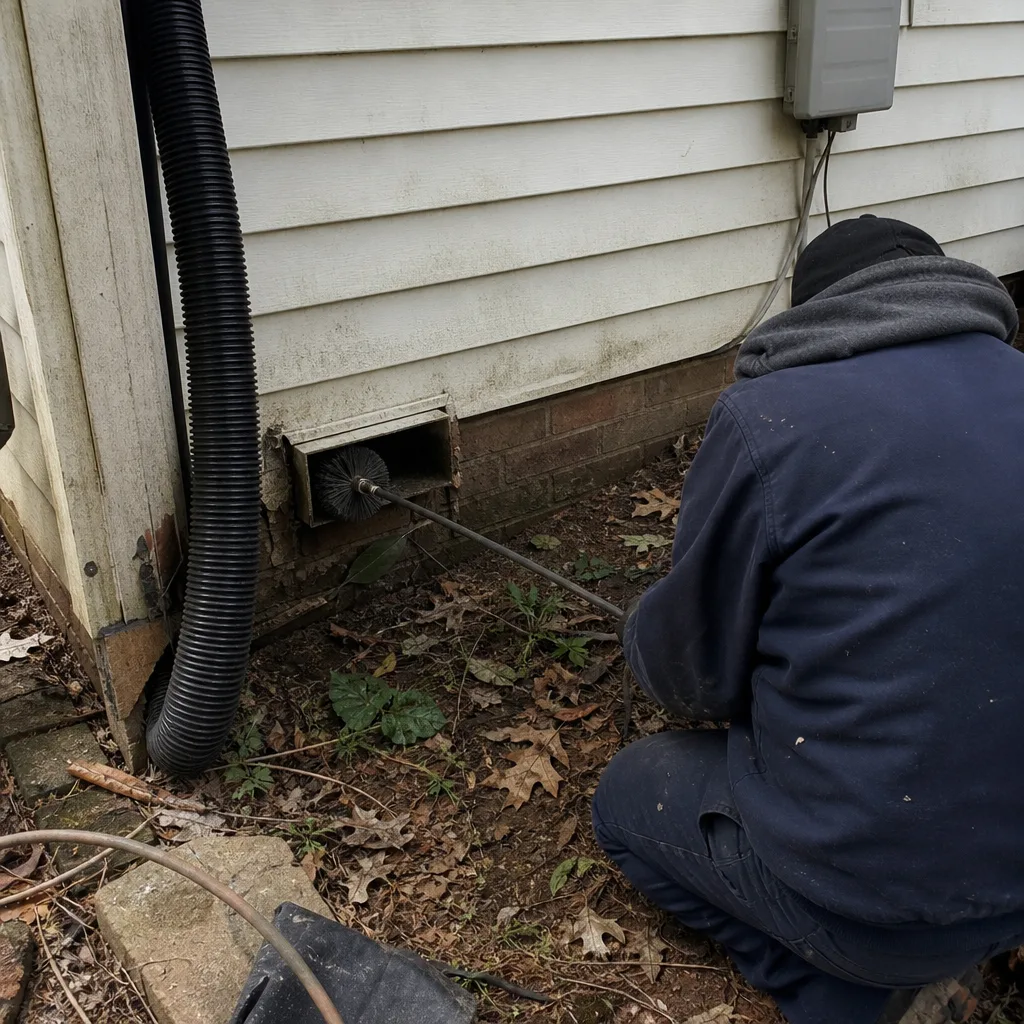 Before
 After
After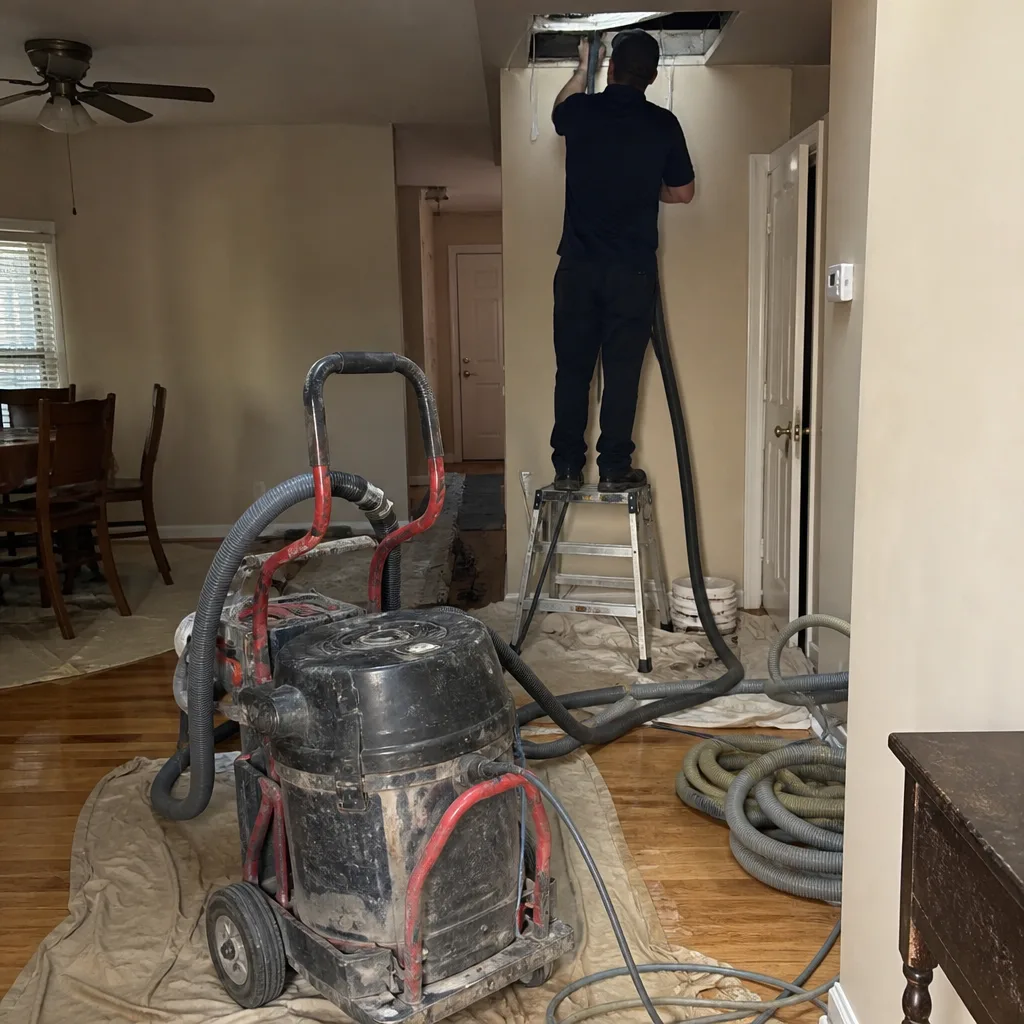 Before
 After
After